
Japan’s currency in 2025: Japanese economy, yen, and the Nikkei


What’s really happening to Japan’s currency in 2025 as global trade tensions escalate? Trading expert Michael Stark breaks down how the Japanese currency — the yen, the world’s third most traded currency — is being shaped by tariffs, monetary policy shifts, and the outlook for the Japanese economy and Nikkei 225.
Both trading-specific and general media have mostly reported on new American tariffs in 2025 through the lens of China. Tariffs on a wide range of goods and countries have been introduced, paused, delayed, and negotiated, with most negotiations ongoing or barely started. The biggest threat from tariffs to global trade and sentiment lies in the relationship between China and the USA, the largest bilateral trade in the world in terms of gross value in dollars. How are tariffs affecting other countries, though?
One key area of concern is the currency of Japan — the yen — which is already under pressure from evolving monetary policy. Japan’s currency plays a vital role in global trade and forex markets, especially during uncertain environments in 2025.
The latest episode of Trading Talks from Exness discusses how current expectations for monetary policy in Japan have been evolving and briefly looks at how tariffs could also affect the situation for the Japanese yen. Here I’m looking deeper into that, specifically which industries might have the strongest ongoing effect from trade disputes, and how the developing situation might drive the Nikkei 225. If you haven’t already watched it, here’s the podcast and a summary of its key points.
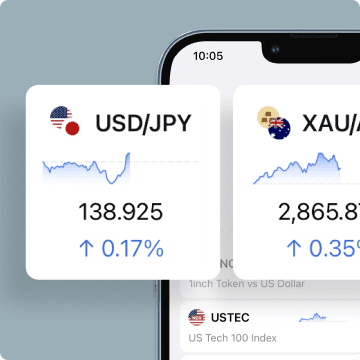
Take control of your FX trading costs
See how much you can save on every forex trade with better-than-market conditions.
Key takeaways
- The Japanese yen remains under pressure due to delayed rate hikes and slow inflation. Japan was the last major economy to tighten policy, which weakened the Japanese currency compared to most other currencies since the COVID-19 era.
- A weaker Japanese yen supports exports, but falling import costs limit inflation risks. With oil prices staying relatively low in early 2025, higher import costs are not expected to significantly impact Japan’s economy or the JPY exchange rate.
- Japan is no longer among the most vulnerable to American tariffs, despite past tensions. While once targeted for its auto exports, the country has avoided the harshest penalties in 2025 and may secure trade compromises with the US.
- The USDJPY carry trade remains in focus amid wide interest rate differentials. As long as the USD offers much higher yields, many traders continue to borrow in yen to fund positions in the U.S. dollar — a trading strategy involving large amounts of money.
- The Japanese currency is generally considered a haven, but that status is fading in 2025. Without a major dovish shift by the Fed, the currency of Japan is unlikely to regain its traditional role during periods of uncertainty, making it less attractive despite being the world’s third most traded currency.
Trade talks between Japan and the USA
The latest round of trade negotiations between the USA and Japan started in April, shortly after ‘Liberation Day’ and the announcement and walkback of sweeping tariffs. Japan’s Minister of Economic Revitalization, Ryosei Akazawa, and his delegation met Donald Trump at the White House. Mr Akazawa was photographed in a red MAGA hat, sitting across from the American President, smiling while giving a thumbs up. Back home in Japan, it looked to many like an embarrassing capitulation, but the government insisted that progress was being made: there was a significant probability that Japan would be exempt from many tariffs and might reach a deal similar to the one secured by the UK. Then the two sides reached an impasse which hasn’t been resolved for more than two months. Where did it go wrong?
Part of it seems to be Japan’s vulnerability to strongman tactics, especially given recent instability in the domestic rice market and generally lukewarm performance of the overall Japanese economy. Japanese trade has yet to recover strongly from 2022’s slump:

Although these negotations pale in importance compared to Sino-American talks, there’s still a lot at stake. Mr Azakawa is eager to persuade the Americans to cancel or reduce the proposed 25% tariff on imported Japanese cars and, if possible, do the same for the possible 24% reciprocal tariff on other Japanese goods.
Equally, it’s not clear what the benefit is for the USA in damaging the longstanding, friendly relationship between the two countries. Japan’s Prime Minister Shigeru Ishiba commented in early July that Japan is one of the largest foreign creators of jobs in the USA and America’s largest foreign investor. However, President Trump has his sights on Japan’s trade surplus with the USA, which stands at around $69 billion.
The obvious developing scenario, a fairly positive compromise as far as markets are concerned, would be that Japan simply agrees to import more oil, rice, and other products from the USA. However, this would also be politically very unpopular in Japan; many voters would see it as giving in.
Oil is one of the commodities most affected by ongoing tension over tariffs. Whichever direction it takes, trade it with the tightest and most stable spreads on USOIL with Exness.*

Exness Trade app
Trade with confidence anytime, anywhere.
Japan’s currency as a haven: Can the yen still provide safety?
Historically, Japan’s currency, the yen, has tended to gain against most other currencies during periods of global economic and political uncertainty. There are various reasons for this. One is that the carry trade usually winds down significantly as volatility and uncertainty increase. Another is that the majority of Japan’s high national debt is held domestically and could be written off in the extreme circumstances of a major economic crisis.
The Japanese yen has been notably less in focus as a haven in 2025 so far, though. With the USA antagonizing its traditional allies, including Japan, for much of the first half of the year, the latter’s response to the Israeli-Iranian war was particularly noncommittal, also canceling plans to attend NATO’s conference in June.
Beyond a changing political situation, the most obvious factor against the narrative of the Japanese yen gaining as a haven during current instability is monetary policy. As of the middle of July 2025, the differential between the dollar and Japanese yen in rates is 3.75-4% in favor of the dollar. The Bank of Japan is likely to hike to 0.75% on 31 July, but it’s extremely unlikely that the difference in rates will drop significantly below 3% for the foreseeable future.
Traditionally, one of the most important factors driving trends in forex in the medium to longer term is interest. On this basis, a clear comeback by the Japanese yen looks unlikely unless the outlook for monetary policy shifts more dovish in the USA. This will probably remain a central point of focus for the rest of 2025 alongside trade talks. As interest rate differentials remain wide, the currency of Japan looks unlikely to regain haven status without a dovish shift by the Fed.
Why the Japanese currency matters in 2025
Forex traders are closely watching Japan’s currency because of its historical role as a haven and its importance in the global carry trade. In 2025, with rising geopolitical risks and shifting monetary policies, the Japanese yen's future remains a key area of speculation and strategy.
With Exness, you can rely on consistently fast and accurate execution for yen and dollar currency pairs, even during major news events like central bank meetings and press conferences.**
The Japanese auto industry: underlying problems?
Various analysts have pointed to Japan as being one of the most vulnerable to tariffs among the USA’s major allies due to the significant challenges faced by its automotive industry, even before the start of Donald Trump’s second term. There are definitely elements of truth to this, but I don’t think it’s the full story.

Japanese exports to the USA declined in May by 11%, and to China down around 9%. However, sales to most other major partners increased at least slightly, and the decline in exports wasn’t nearly as bad as the -3.8% expected.
Increasingly stiff competition from Chinese carmakers, particularly in many export markets, meant that in 2024 and earlier, most active participants in the Japanese stock market had expected major companies in the sector to downsize, consolidate, or restructure sooner or later. Sure enough, Nissan, among others, announced in July that it was planning to cut a significant percentage of its global workforce and close a third of its factories, although comments about American tariffs were mostly interpreted as excuses rather than underlying rationale.
The counterpoint here is that Japan doesn’t just export cars. As whole sectors, IT and consumer discretionary are larger constituents of the Nikkei 225 than automakers, and the industrial sector also includes important areas apart from cars, such as robotics. Japan remains the leading manufacturer of robots with about 38% of global production in 2024.
Significantly, Japanese automakers’ investments into robotics surged last year. A total of around 13,000 industrial robots of all types were installed in Japan in 2024, many of which make cars, so the current situation of job losses in the sector doesn’t clearly indicate a sustained downturn yet, but rather a shift in approach. Whether major car companies like Nissan, Toyota, and more can turn it around seems to depend as much on the success of current restructuring as it does on tariffs.
What’s next for the Nikkei and the currency of Japan?
While the situation looks broadly negative for the Japanese yen, the same can’t be said currently for Japan’s main index, the Nikkei 225, although most other major indices have outperformed it so far this year:

The Nikkei was generally more stable than many other major indices in 2024, with the notable exception of August. However, it started to decline significantly in February 2025, bottoming out for this cycle in April around Donald Trump’s ‘Liberation Day’. Since then, the recovery has been strong and fairly consistent amid a very high volume of buying.
The flight of capital from the USA to other countries in the second quarter was a clearly observable phenomenon from which the Nikkei benefited, although to a lesser degree than other major indices such as the Hang Seng or DAX. In the year to date, the Nikkei is down around 0.5%, outperforming only New Zealand, Russia, and some other small indices.
However, here I want to question the narrative of automakers being the weak link. In the last year, the worst performers in the Nikkei 225 have been, in order, TDK (electronics and data storage), Sony, Dai-Ichi Life (insurance), NEC (IT and electronics), and Shionogi (pharmaceuticals). Mazda and Nissan have been the worst-performing automakers but not within the worst 10 performers of the index.
Conversely, some carmakers, like Honda, declined only 10% overall, while other conglomerates, such as Mitsubishi, saw significant outperformance, although their auto divisions performed less well. There’s some degree of concern about domestic consumption in many developed countries now, not just Japan, and many constituents of the Nikkei pay enough dividends to attract investments compared to equivalent major American companies.
Access top global indices
Trade leading stock indices across the US, UK, China, Germany, and Japan, with ultra-fast execution and low and stable spreads.*
Spreads may fluctuate and widen due to factors including market volatility, news releases, economic events, when markets open or close, and the type of instruments being traded.
Final thoughts: Opportunities beneath the surface
While at first glance the situation for both the Japanese yen and Nikkei 225 looks challenging, for various reasons discussed above, this might change in the near future. Whether it’s the USA drawing its allies closer again, ‘TACO’ (‘Trump Always Chickens Out’), greater economic challenges developing elsewhere in the world, or possibly even the Bank of Japan becoming more hawkish, there’s a variety of potential opportunities for pairs with the Japanese yen and the Nikkei 225 coming up in the second half of 2025.
Whatever happens, be ready: have your account funded and ready to trade Japan’s currency – particularly the dollar-yen pair – with a stable spread of one pip or less nearly 90% of the time, including around the Fed’s upcoming meeting on 30 July. If conditions change, be among the first to trade the new trends with confidence in a supportive broker: Exness.
*"Most stable spreads" refers to the lowest maximum spreads, and "Tightest spreads" refers to tightest average spreads on Exness Pro account, for USOIL based on data collected from 25 August - 7 September 2024, when compared to the corresponding spreads across commission-free accounts of other brokers.
**Delays and slippage may occur. No guarantee of execution speed or precision is provided.
Share:
Related


Exness Trade app
Trade with confidence anytime, anywhere.


Get the app
App title

Trading is risky. T&Cs apply.


