
How to use the Price Volume Trend (PVT) formula in trading


Measuring money flow and trading volume is an essential skill. However, PVT takes the “skill” out of the equation, ensuring you can focus on clear signals rather than complex calculations.
The Price Volume Trend indicator (PVT) is one of the most common tools used to measure money flow. Unlike a single-day snapshot, which can only show price and volume activity for that day, PVT accumulates those values over time, combining today’s volume with the percentage change in price and adding it to the previous day’s total—this is what’s known as the PVT formula.
Think of it as a refined version of OBV. While OBV adds or subtracts total daily volume depending on whether it was an up day or a down day, PVT adds or subtracts only a portion of the daily volume, making it more sensitive to shifts in buying and selling pressure. This allows traders to capture short-term momentum more effectively and identify potential trend reversals far earlier.
As for how it works, PVT multiplies the percentage change in price by the day’s volume and then adds or subtracts that value to a running total, creating a line that reflects both price direction and the intensity of trading activity.
This calculation is at the core of the Price Volume Trend formula, which traders use to convert raw price and volume data into actionable trend insights.
Content
- How to interpret PVT signals in trading
- Combining the Price Volume Trend formula with other indicators
- PVT settings and customization tips
- Trading example: using PVT in a EURUSD trade
- Tips for using the PVT indicator effectively
- Is the PVT indicator strategy right for you?
- Final thoughts on mastering the Price Volume Trend indicator
- Frequently asked questions
Key takeaways
- The PVT formula converts price and volume data into a cumulative money-flow line, revealing whether price movement is backed by real trading volume. By adding the percentage price change multiplied by the volume to the previous day’s PVT value, the price volume trend indicator offers deeper insight than other price volume indicators that rely only on up-day or down-day volume.
- A rising PVT line confirms a bullish upward price trend, while a falling PVT line validates a downward price trend. This helps traders gauge buying or selling pressure and avoid false breakouts by ensuring that rising prices or decreasing price moves are supported by meaningful volume.
- Divergences between price action and the PVT line act as early signals of potential trend reversals. For example, higher highs in stock price combined with a flat or falling PVT can indicate fading momentum, while lower lows with a rising PVT may highlight bullish divergence and weakening selling pressure.
- PVT becomes far more effective when combined with other indicators such as moving averages and RSI. Using these tools alongside the VPT/PVT indicator provides clearer trading signals, validates the current trend, and strengthens technical analysis by compensating for what the volume price trend indicator alone cannot measure.
- Customizing PVT for different timeframes and pairing it with other price volume indicators helps traders adapt to various market conditions. Whether identifying intraday moves or multi-day market trends, the PVT line’s sensitivity to percentage change and trading volume makes it a valuable tool for confirming trend strength and spotting potential reversals.
Exness Trade app
Trade with confidence anytime, anywhere.

However, interpreting that line fully is not something that you can do right off the bat once you take a peek at the PVT formula.
How to interpret PVT signals in trading
Interpreting PVT signals doesn’t require advanced math, but, like all technical indicators, it does require some experience and context. When done properly, price volume trend analysis can confirm whether a price move is being supported by real trading volume, offering early clues about trend strength or exhaustion.
Confirming bullish and bearish trends
The simple part is confirming bullish and bearish trends as you do your price volume trend analysis. When the line is rising, it indicates that buying pressure is strong, supporting a bullish trend and giving traders confidence that an upward price movement is backed by volume.
Conversely, a falling PVT line signals increasing selling pressure, confirming a bearish trend and suggesting that downward price movements are supported by market activity. Using PVT alongside price action, then, can help you avoid false breakouts and validate trend strength.

Based on the theory that swings in positive or negative price-adjusted volume flow precede changes in price, it can also identify potential trend reversals, especially when there’s a divergence.
Spotting divergences for early warning signs
This is where things get a little trickier. Divergence occurs when price movement is not confirmed by the indicator, meaning that the underlying momentum may be weakening.
For instance, if the price is reaching new highs but the PVT line fails to make corresponding highs, it signals that buying pressure is fading and a potential bearish reversal could be on the horizon.
On the other hand, if the price drops to new lows while the PVT line starts rising, it indicates that selling pressure is losing strength, hinting at a possible bullish reversal.

Combining the Price Volume Trend formula with other indicators
The reason we mentioned that interpreting PVT requires experience and context is because you won’t be working from PVT alone. That would be too risky.
The reason is that the Price Volume Trend formula only measures the flow of money through price and volume; it doesn’t capture other aspects, like overbought/oversold conditions, trend strength, or market volatility. You have to combine PVT with other indicators such as moving averages and RSI.
Moving averages for trend clarity
When it comes to moving averages, combining the two can help you confirm trends and avoid false signals, with a common approach being to use a short-term MA alongside a long-term MA.
When the PVT line crosses above the short-term moving average, for example, a 10-day MA, and both are trending above the long-term MA, such as a 50-day MA, this confirms a bullish trend. A PVT cross below the short-term MA, meanwhile, reinforces a bearish trend.
Relative Strength Index (RSI) for momentum checks
The Relative Strength Index (RSI) is another popular momentum indicator that measures whether an asset is overbought or oversold. Using it alongside PVT, then, can give you a far clearer picture of whether the market is truly gaining or losing momentum.
If the PVT is indicating that a trend is backed by real buying or selling volume, you can then look at the RSI to determine whether it’s stretched in one direction, helping you to determine whether it’s a genuine entry or exit point.
A practical approach here is to wait for both signals to align before entering a trade. For instance, a rising PVT line combined with an RSI that is moving out of oversold territory can confirm a bullish setup, while a falling PVT line alongside an RSI exiting overbought conditions may validate a bearish trade opportunity.
PVT settings and customization tips
Once you get the hang of applying the PVT formula and using it with other indicators, you can start fine-tuning the settings to match your trading style and timeframe. Of course, PVT doesn’t have a standard “period” like other indicators, but you can still adjust the way you use or visualise it.
Default settings and why they work for most traders
The default settings are, in fact, the default auto-calculation method. As we mentioned before, this involves taking yesterday’s PVT value and adding the product of today’s volume and the percentage change in price, ensuring that each day’s price movement is weighted by the volume behind it.
For most traders, this is the best way to obtain a more accurate picture of money flow compared to looking at price or volume alone, and indeed, the core PVT calculation itself cannot be changed.
Adapting PVT for day trading vs swing trading
However, sometimes traders like to put their own spin on things. Some day traders use shorter timeframes, like 5-minute or 15-minute charts, to make PVT more sensitive to rapid price and volume changes, while swing traders use daily or 4-hour charts to smooth out the noise.
Platforms like Exness also allow you to customize the style and visibility of the PVT line, with options to adjust precision and control how the results are displayed on the chart. Either way, the underlying calculation of PVT remains the same; what changes is how you interpret it based on timeframe, chart style, and visual settings.

- Day traders: Look for Intraday Divergences With PVT.
- Swing traders: Focus on Multi-Day Cumulative Confirmation.
Trading example: using PVT in a EURUSD trade
Let’s look at the PVT in action with a trading example. In this example, we’re using a 4-hour EURUSD chart, with just the PVT indicator applied for simplicity.
- Entry point: Take a look at the PVT line when the price begins to break above a recent resistance level . If it’s rising in tandem with the breakout, this confirms that the upward movement is supported by volume. A flat or falling PVT line, on the other hand, is a divergence and could indicate a false breakout.

- Exit point: Once the upward movement is confirmed and you have entered the trend, you would then monitor the PVT line for signs of divergence or slowing momentum. If the price continues higher but the PVT begins to flatten or fall, it might be time to consider closing the trade or tightening stops to protect profits.

- Additional confirmation: We’ve used a simple chart with only the PVT applied in this example, but partner the PVT with other indicators to confirm both entry and exit points before making them.

Tips for using the PVT indicator effectively
Before getting started with the PVT indicator, you must know that there are limitations and pitfalls, just as there are for any other indicator in the trading world. To help you avoid them, here are a few top tips to bear in mind:
- Combine it with other indicators for reliability.
- Look for divergences before reversals.
- Apply it to liquid markets (FX majors, gold, and popular stocks).
- Use a demo account to backtest PVT-based strategies.
Is the PVT indicator strategy right for you?
That last tip is always the one you have to permanently lodge in your brain: while it’s perfectly possible that the PVT indicator strategy is right for you, because of its versatility and clear volume-based insights, it can work for almost any trader, it’ll be hard to tell if it fits into your specific trading style and risk tolerance before you’ve tested it out in a risk-free environment.
Swing traders might find it useful for confirming longer-term moves. Position traders might find it offers strong volume-backed confirmation. Scalpers, on the other hand, might find it too slow or lagging for very short-term trades.
Either way, you won’t truly know its practical value in your own trading strategy—or how to best pair it with broader strategies, where it works best—until you’ve got to grips with it in a demo account and effectively tested the waters. By doing this, you’re essentially learning the strengths and limitations of this indicator and several others without risking real capital.
Trading glossary
Percentage price change The percentage price change is the ratio of the current price to the previous day's price, showing how much a stock price has moved in relative terms. It is central to the PVT formula because the price volume trend indicator multiplies this percentage increase or decrease by the daily volume to measure money flow behind each price move.
Divergence (Bullish / Bearish divergence) Divergence occurs when price action and a trend indicator—such as the PVT indicator, VPT indicator, or other price volume indicators—move in opposite directions. A bullish divergence occurs when the price forms lower lows while the PVT line forms higher lows, signaling weakening selling pressure and helping traders identify potential trend reversals.
Moving average (MA) A moving average is a technical analysis tool that smooths out price movement to help traders understand market trends and refine trading signals. When paired with the volume price trend indicator, moving averages clarify whether rising prices or falling prices are supported by real trading volume, especially during signal line crossovers.
Overbought / Oversold These terms describe market conditions where price and volume suggest that an asset may be stretched too far upward or downward. Used alongside the price volume trend PVT and other indicators, they help traders judge whether the current trend is likely to continue or if a potential reversal may occur.
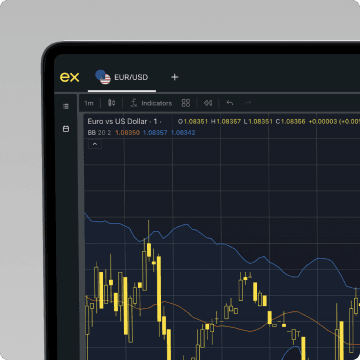
Look at the technical view
Execute your next move with confidence using a range of advanced technical indicators.
Final thoughts on mastering the Price Volume Trend indicator
PVT works well to highlight trends backed by strong volume, confirm the strength of breakouts, and provide early warning signs of potential reversals through divergences.
Ultimately, mastering the Price Volume Trend formula is about understanding how price and volume interact to drive momentum. When combined with structured price volume trend analysis, it becomes a reliable method for confirming the strength of market moves and identifying early signs of reversals.
While it’s a powerful tool on its own, it’s most effective when combined with other indicators, such as those we mentioned above, as well as a clear trading plan. With practice on the Exness demo account, this is exactly what you can do, ensuring your trades are confident and reliable when you’re making decisions in the real world.
Frequently asked questions
How is PVT calculated?
PVT is calculated by adding the product of the percentage price change and the day’s trading volume to the previous day’s PVT value. This running total creates a line that reflects both price movement and the strength of money flow behind it.
How to use PVT?
Traders use PVT to confirm whether rising or falling prices are supported by real volume and to spot divergences that may signal potential trend reversals. When the PVT line moves in the same direction as price, it strengthens the validity of the trend.
What is a PVT indicator?
The PVT indicator is a price-and-volume-based technical analysis tool that measures money flow by adjusting volume according to percentage price change. It helps traders evaluate buying or selling pressure more accurately than indicators that rely only on total volume.
How to interpret Price Volume Trend?
A rising PVT line suggests strong buying pressure and supports an upward price trend, while a falling PVT line confirms selling pressure during a downward price trend. If the price moves one way while the PVT moves in the opposite direction, the divergence may signal weakening momentum or a potential reversal.
Share:
Related
Trading Pro Q&A: Real breakout or liquidity-driven fakeout?
Trading Pro Q&A

Trading Pro Q&A: How do you validate support and resistance levels?
Trading Pro Q&A

Balancing fundamentals and technical analysis for forex
Expert opinions

Trading Pro Q&A: What market structure concepts do you rely on most, and why?
Trading Pro Q&A

Exness Trade app
Trade with confidence anytime, anywhere.


Get the app
App title

Trading is risky. T&Cs apply.


