


Historical forex data comes in various formats, including tick data, which measures every price change. Traders pore through this data to find repeatable patterns and inform future trading decisions.
We are in the age of information, the era of Big Data, and understanding what trading is helps explain why traders increasingly use data to their advantage. Forex historical data is an incredibly useful tool for finding market patterns—whether you’re a beginner or a pro, you need to know how to find and use this data.
Content
Key takeaways
- Forex historical data provides a detailed log of past prices for all major and minor currency pairs. Traders rely on this information to understand how markets have behaved over time.
- Platforms and websites convert raw data into readable formats like CSV or JSON. These files typically include bid/ask prices, timestamps, and other values needed for analysis.
- Traders use historical exchange rates to identify patterns and improve their trading strategies. This can include everything from technical analysis to long-term market studies.
- Backtesting strategies with historical forex data helps evaluate potential performance before trading live. It allows traders to refine their approach under various past market conditions.
- Data integrity is essential when working with historical forex data. Using trusted, reputable sources reduces the risks of gaps, inaccuracies, or unreliable inputs.
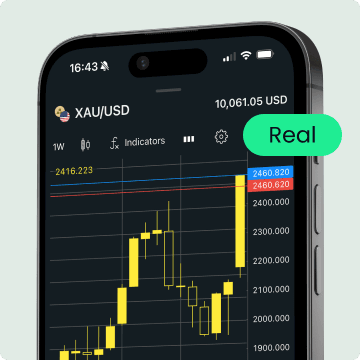
Exness Trade app
Trade with confidence anytime, anywhere.
Different types of forex historical data
All forex data shows the price, but how it’s presented and the timeframe it covers depend on the dataset. For example, tick data shows every price change, whereas other datasets pick prices from specific time periods.
Tick data
Tick data records every price change, with each entry showing a bid/ask price and a timestamp. Traders use it to conduct an advanced technical analysis for high-frequency trading and to gauge trading volume.
For example, the following is taken from the EURUSD currency pair (raw spread) on November 10, 2025:
Symbol | Timestamp | Bid | Ask |
EURUSD_Raw_Spread | 2025-11-10 00:00:00.100Z | 1.15434 | 1.15434 |
Download tick data for free from the Exness website’s tick history section. Simply select your currency pair, followed by your preferred trading period (year, month, and day), and click “get ticks.”

Time-specific data
Forex data can show you information during specific timeframes, such as minutes, hours, days, weeks, and months.
For example, minute data displays the open, close, high, and low prices in one-minute intervals, while daily forex data shows this information for each day.
Daily, weekly, and monthly data sets are commonly used for long-term analysis, with traders setting a start and end date to gauge how the market performed during a specific period.
Shorter periods are better for scalpers and day traders, especially when applying focused intraday trading techniques that rely on high-resolution data.
Where to find forex historical data
As noted above, you can download extensive forex historical data directly from the Exness website. You can also download it from trading platforms like MetaTrader 4 and MetaTrader 5.
Look under “Tools” and “History Center” on MT4, where you can browse through the list of symbols (including currencies like AUDCAD, as well as commodities like Brent Crude oil), and choose a timeframe. On MT5, you’ll find it under “View > Symbols.”
Various websites and tools offer complex forex historical data at a cost, and will often provide a real-time data feed. However, platform data is free, convenient, and suitable for most trading strategies.

How to use historical forex data
Forex data files are available in various formats, with CSV (Comma-Separated Values) being the most common. The CSV format is easy to read, and you can import the data into spreadsheets such as Microsoft Excel and Google Sheets. JSON is another common format.
How you use this data depends on your strategy:
Backtesting
Backtesting involves testing current strategies against historical forex data to analyze their effectiveness. Using a structured forex backtesting strategy can help traders evaluate performance more accurately.
Traders will theoretically implement their strategy and then monitor the values for patterns, trends, and triggers. The backtest data then informs future decisions.
Manual analysis
By charting historical data and using various analytical tools, traders can identify patterns or observe how the market reacted to specific economic events. For example, they may review how the US dollar performed against the Japanese yen following previous trade tariffs, which will inform future decisions if the same scenario arises again.

Automated analysis
An automated trading system processes vast amounts of historical forex data to identify patterns. These “trading robots” are entirely automated, turning imported data and user inputs into trading activity.
However, developers may exaggerate the effectiveness of their application, making grandiose claims that fail to deliver. They are also prone to over-optimization, relying too much on historical data to make decisions that don’t perform in live markets.
Potential problems with forex history data
There are a couple of potential issues with using forex historical data.
Firstly, just because the market behaved in a certain way in the past doesn’t mean it will do so again. Strong rallies by the US dollar against a weaker currency, such as the Turkish lira, could indicate similar patterns in the future. However, if the US reports higher unemployment figures, markets may remain bearish.
Secondly, the data only works if it’s accurate, and as you seek larger and more complicated datasets, there’s a greater risk of inaccuracies. There could be critical gaps, incorrect timestamps, or false entries.
If you stick with trusted sources, such as Exness, you can access vast amounts of forex historical data for free.
Trading glossary
Tick data
Tick data is the most detailed form of forex historical data, recording every price change for selected currency pairs. Traders use it for precise technical analysis, backtesting, and developing trading strategies.
OHLC Data (Open, High, Low, Close)
OHLC data summarizes historical exchange rates within specific timeframes, showing how the market moved during each interval. It’s commonly downloaded in CSV format or JSON and imported into Excel or Google Sheets for analysis.
Bid–ask spread
The bid–ask spread is the difference between the price at which a currency can be bought and sold, visible in most forex data files. It helps traders assess trading costs and liquidity when reviewing historical forex data.
Timeframes
Timeframes determine how historical data is grouped—such as minute, hourly, or monthly intervals. Traders select them based on their strategy and often access them through tools like the MetaTrader History Center.
Backtesting
Backtesting involves applying a trading strategy to historical forex data to evaluate how it might have performed in past market conditions. Traders typically import CSV data into a platform or spreadsheet to analyze results and refine their approach.
Trade forex with an edge
Experience better-than-market conditions. Try live or demo.
Final thoughts
Understanding and using forex historical data is essential for traders who want to analyze past market behavior, refine their strategies, and make more informed decisions. Whether you’re working with tick data, OHLC charts, or long-term historical exchange rates, reliable sources and careful analysis are key. By learning how to download, interpret, and apply this data effectively, traders can build a stronger foundation for both manual and automated trading strategies. Ultimately, historical forex data is a valuable tool—one that, when used wisely, can help you navigate the markets with greater confidence.
Frequently asked questions
Where can I download forex historical data?
You can download free forex historical data from platforms like MetaTrader’s History Center or from reputable brokers that provide data files. Many websites also offer advanced datasets, sometimes for a fee.
What format is best for working with historical forex data?
Most traders prefer the CSV format because it’s easy to import into tools like Excel, Google Sheets, or trading software. JSON is also common when working with automated systems or custom applications.
How accurate is historical forex data for predicting future trends?
Historical forex data is useful for analysis and backtesting, but past performance doesn’t guarantee future results. Markets can shift quickly due to economic events, so traders should combine data with risk-management strategies.
Share:
Related


Exness Trade app
Trade with confidence anytime, anywhere.


Get the app
App title

Trading is risky. T&Cs apply.


