


Focus your strategy, plot your trades, manage risk, and achieve better results with these forex analysis tools and resources, including advanced trading platforms, charting tools, economic calendars, technical indicators, and the best forex analysis sites.
You don’t need to go it alone—there are numerous forex analysis tools and sites to assist you in the forex market. These range from simple tools built into trading platforms to expert-led blogs, data brokers, and financial news feeds. Support your forex data analysis with these top tools and sites.
Content
Key takeaways
- Forex analysis tools work best when they’re built into your trading platform. Using charts, indicators, and data directly within your platform reduces complexity and helps traders focus on actionable forex data analysis rather than juggling multiple tools.
- Charts and technical indicators are the foundation of technical forex analysis. Candlestick charts, trend lines, and indicators like moving averages and RSI help traders interpret historical price data and identify potential entry and exit points.
- Backtesting strategies with historical data improves trading confidence. Tools like MetaTrader’s Strategy Tester allow traders to evaluate strategies against past market conditions before risking real capital.
- Fundamental analysis tools add context beyond price movements. Economic calendars, real-time news alerts, and financial reports help traders understand how macroeconomic events influence currency markets.
- Reliable information sources are essential for timely market decisions. Following the best forex analysis sites ensures traders remain informed of economic releases, market sentiment shifts, and major global events that impact price action.
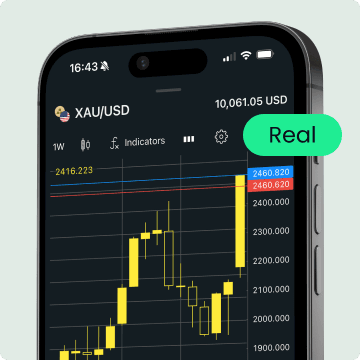
Exness Trade app
Trade with confidence anytime, anywhere.
A trusted trading platform—study where you trade
The more programs and tools you introduce to your forex trading, the more complicated it becomes. A cluttered screen—a mass of charts, candlesticks, and data—leads to analysis paralysis. You have so much data and so many choices that you don’t know where to begin.
Thankfully, most of what you need, especially as a beginner, should be accessible from your chosen forex trading platform.
With a trusted forex broker like Exness, you’ll have access to high-tech, feature-rich platforms like the Exness Terminal, MetaTrader 4, MetaTrader 5, and the Exness Trade app, all of which give traders access to advanced analytical tools:
Browse advanced charts and price data
Charts, and candlestick charts in particular, are critical to a forex technical analysis. Candlestick charts display open, close, high, and low price data in a single, easy-to-read format.
You can also draw trend lines and support/resistance lines directly into the trading software, before looking for chart patterns to predict future price movements.
These platforms cram a lot of data into a small space, but they’re designed to be user-friendly, and beginners can start with a demo trading account to familiarize themselves with the layout.

Use thousands of technical indicators
Use indicators to discover market momentum, judge volume, and identify trends. Critical to technical analysis forex trading, these tools overlay pricing charts to provide various insights when used independently or in combination:
Indicators | Benefit | Why they are effective |
Moving averages Exponential moving averages Bollinger Bands | Provide a broader view of the market. | They smooth pricing data to eliminate short-term volatility and provide a holistic market view. |
Average true range Bollinger Bands | Show market volatility. | Higher volatility may confirm more signals and reveal potential opportunities, albeit with greater risk. |
Relative strength index Stochastic oscillator | Indicate trend strength and momentum. | Use them to confirm whether a new trend has enough support to continue. |
There are dozens of indicators built into the Exness Terminal, as well as 30+ on MetaTrader 4 and 80+ on MetaTrader 5.
These should be more than sufficient to satisfy most traders, but more experienced traders can download thousands more from the MQL5 marketplace.
Backtest advanced trading strategies
MetaTrader 4 and 5 both have a “Strategy Tester” for backtesting strategies—using historical data to test current strategies.
These platforms have extensive data on most currency pairs, as well as stocks, indices, and commodities. You can also get specific forex data from the Exness tick history page or from services like Dukascopy.
Data brokers sell much larger data sets for backtesting purposes, but these come at a substantial cost.

The best forex analysis tools
The best forex analysis tools depend on your preferred market analysis.
Technical analysis is all about historical price data. Get as much data as you can, make sure it’s reliable, and then use charts and indicators to make sense of it and find entry and exit points.
Fundamental data is a little more nuanced. It focuses on the economic news and geopolitical events that influence financial markets. The following fundamental analysis tools can help you with finding, understanding, and utilizing this information:
- Economic calendar: Follow important economic news critical to investing and trading with the Exness economic calendar.
- Real-time forex news alerts: Get regular updates on the latest forex news stories with apps like FXStreet, available via the Exness Trade app and your personal area.
- Trading signals by Trading Central: Develop trading strategies and adapt your approach with Trading Central signals, available in your Exness personal area and the Exness Trade app.
- Financial news: Learn about GDP announcements, interest rates, and other key economic factors and anticipate major market movements with financial news apps like the Financial Times, Bloomberg, and the Wall Street Journal.

The best forex analysis sites
To properly analyze the markets, you need the right information at the right time. If the Federal Reserve makes a market-moving announcement, the value of the US dollar reaches new highs, or there’s a significant shift in trader confidence, make sure you catch it.
These sites will keep you up to date on important economic information:
For expert-led discussions on currencies, commodities, stocks, and other financial instruments, bookmark Exness Insights.
Setting your risk tolerance as a new trader
Before you start thinking about forex data analysis tools, you need to clearly define your trading capital.
Calculate how much you can afford to lose, and determine how much of this money you want to assign to the forex market.
From there, use a percentage calculator to set your position sizes—ideally, no more than 1-2% of your total capital—which is the maximum amount to trade on a single currency pair.
Choose a realistic risk-reward ratio, outlining how much you’re willing to risk compared to the potential profit. A 100 USD trade with a 300 USD potential profit yields a 1/3 ratio.
Finally, support your positions using stop loss and take profit orders, available on all respected trading platforms.
Knowledge, skills, and the best trade ideas will only get you so far—in a dynamic and volatile market like forex, you need to carefully manage all risks.
Trading glossary
Candlestick chart A price chart that shows an asset’s open, close, high, and low prices for a specific time period, helping traders visualize market trends and momentum.
Technical indicators Mathematical tools applied to price charts—such as moving averages or RSI—that help traders identify trends, momentum, volatility, and potential entry or exit points.
Backtesting The process of testing a trading strategy using historical market data to evaluate how it might have performed before risking real capital.
Economic calendar A schedule of upcoming economic events and data releases, such as interest rate decisions or GDP reports, that can significantly impact forex markets.
Risk-reward ratio A comparison of how much a trader is willing to risk on a trade versus the potential profit, used to assess whether a trade is worth taking.
Take control of your FX trading costs
See how much you can save on every forex trade with better-than-market conditions.
Final thoughts
Forex analysis tools play a crucial role in helping traders understand market behavior and identify smart entry and exit opportunities. Trading platforms like the Exness Terminal bring together essential resources such as advanced charts, technical indicators, and historical price data, allowing traders to perform detailed analysis without relying on multiple external tools. Economic calendars and trusted financial news sources further enhance market insight by providing context around key economic events that influence currency movements.
However, even the most advanced analysis tools are only effective when paired with disciplined risk management. Safeguarding your trading process means defining position sizes, setting realistic risk-reward ratios, and consistently using stop loss and take profit orders. By combining reliable forex analysis tools with a structured risk management approach, traders can build strategies that are both informed and sustainable over the long term.
Frequently asked questions
What are the best forex analysis tools for beginners?
The best forex analysis tools for beginners are built into reliable trading platforms and include candlestick charts, basic technical indicators, economic calendars, and demo accounts for practice. These tools help new traders learn market behavior without overwhelming complexity.
How do forex analysis tools improve trading performance?
Forex analysis tools improve trading performance by helping traders interpret price movements, identify trends, and understand the impact of economic news. When used consistently, they support better timing of entries and exits and more disciplined decision-making.
Do I need both technical and fundamental analysis tools for forex trading?
Yes, using both technical and fundamental analysis tools provides a more complete view of the market. Technical tools focus on price patterns and indicators, while fundamental tools track economic events and news that influence currency values.
Share:
Related
Balancing fundamentals and technical analysis for forex
Expert opinions

Yen forecast 2026: Why is a cautious BoJ still weighing on the Yen?
Analysis

Trading Pro Q&A: What market structure concepts do you rely on most, and why?
Trading Pro Q&A

Bitcoin technical analysis: Reading crypto's unique trends
Analysis

Exness Trade app
Trade with confidence anytime, anywhere.


Get the app
App title

Trading is risky. T&Cs apply.


