
Commodities vs stocks: Understanding market behavior during a crisis


Can traders really predict how markets behave when volatility strikes? In this Deep Dive, trading expert Stanislav Bernukhov examines the dynamics of commodities vs stocks, revealing how commodity price volatility shapes risks, opportunities, and trading strategies during market turbulence.
Do commodities outperform stocks during crises? In this article, I take a closer look at the dynamics of commodities vs stocks and how market behavior changes when uncertainty rises. Drawing on insights from an episode of Exness Trading Talks with Antreas Themistokleous, I explore how the relationship between commodities and equities evolves in turbulent times, and why understanding commodity price volatility is essential for traders seeking to balance risk, seize opportunity, and refine their strategies in unpredictable markets.
Key takeaways
- Both stock and commodity markets can serve as core investment tools. Investors use stocks and commodities to pursue different investment objectives—equities for long-term growth and commodity trading for diversification or to capitalize on short-term opportunities driven by market volatility.
- Stocks tend to show long-term bullish performance. Over decades, stock markets such as the Indian stock market and major stock exchanges like the NYSE have shown steady upward trends, reflecting company growth and economic expansion, unlike the cyclical nature of the commodity market.
- Commodities move in cycles driven by supply, demand, and inflation. Prices of energy commodities, like crude oil or natural gas, as well as soft commodities such as wheat or coffee, often react sharply to market conditions, production fluctuations, and price volatility in global trade.
- Gold stands apart as a safe-haven asset in turbulent times. Unlike most commodities traded on commodity exchanges, gold tends to attract investors during crises or inflation spikes, offering protection against stock price volatility and geopolitical uncertainty.
- Commodity trading provides diversification benefits. Money managers and commodity CTAs often include commodity futures and futures contracts in portfolios to reduce risk; many commodity markets move independently of stock prices, helping create a diversified portfolio across asset types.
Listen to the full episode:
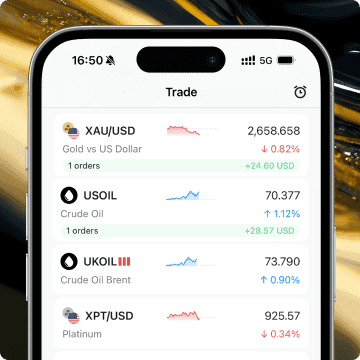
Capitalize on market trends
Trade metals and energy price movements with low, stable spreads.
Commodities vs stocks: Cycles, history, and performance trends
Commodity markets move in cycles, fueled by changes resulting from different market conditions: inflation, supply/demand disruptions, economic growth, or contraction. Stock indices, on the other hand, tend to trend upward over time, which reflects the permanent GDP growth of related countries, inflation, deterioration of the buying power of a local currency, and other factors.
Generally, when it comes to long-term investing, stock indices, especially those related to the US (S&P 500, Dow Jones), generate long-term bullish performance.
It is a well-known fact in the investment industry that the average Sharpe ratio of the S&P 500 index equals 0.68 for the 33 year period, which means a statistical edge for holding a long position (Sharpe ratio equals the ratio between returns of the stock index divided by the standard deviation of returns, and is used as a popular benchmark for measuring effectiveness of investments).
In other words, if you randomly buy the S&P 500 on any given day, you will have a slight probability of it being skewed towards the growth of your position.
Below is a long-term historical chart of the S&P 500 index, which indicates the long-term trending component of the stock markets.

Commodities, on the other hand, have a cyclical nature, displaying very different performance, as their prices depend on crops, weather, supply and demand, etc. Commodities are not designed as long-term investment vehicles, but sometimes they might create furious trends.
The classical example of a crude oil historical chart is displayed below. It’s visible that it has certain boom and bust cycles, depending on various factors.
In general, commodities are known to be more dependent on the real consumption of goods, world economic growth, and certain predictable cycles within a year, such as crop season, withdrawal and injection periods (for natural gas, for example).
Both stock and commodities depend on the inflation level, though commodities react sensitively to the early stages of inflation growth, while stocks produce a long-term protective effect against inflation.

Correlation, diversification, and commodity price volatility
Commodity markets are often used by money managers, who implement certain trend-following strategies. Various commodity markets may not correlate between each other, and that helps to build a diversified portfolio and decrease variance of returns (which is important when it comes to measuring the portfolio metrics). The value of such diversification is described by the Grinold formula, which describes how an investor’s expected performance (Information Ratio) relates to skill and diversification.
The Grinold formula:
IR=IC×N,
where
IR = Information Ratio (expected excess return divided by active risk)
IC = Information Coefficient (correlation between forecasts and actual returns)
N = Breadth (number of independent investment decisions or bets)
Commodity markets help investors make independent investment decisions (Breadth parameter), as they don’t have a direct correlation in many cases. Below is a chart, displaying the performance of different commodities for 2025 (excluding gold), including copper, coffee, cocoa, crude oil, natural gas, corn, and wheat. It’s visible that shapes of related charts look different with little or no correlation between each other.

The role of gold in commodities vs stocks' performance
Gold stands aside from the majority of commodity markets, as it is often used as a hedge against geopolitical risks, an alternative investment vehicle,and protection against crises.
There’s a short-term observation that shows an increased interest in gold when volatility in the stock market goes up.
When equity markets drop, liquidity dries up, and investors look for value preservation, gold often attracts institutional and retail flows. It doesn’t happen overnight, and usually lags by several days, whereas initially gold might go down along with stocks during the first phase of the turmoil.
Below is the example of the performance of gold vs S&P 500 chart during the drop of April 2025 (after the “Liberation Day” announcement by the US president Donald Trump):
You can see that S&P 500 was pressured down more actively (the blue chart), whereas gold recovered quickly after the initial sell-off.

Fundamental drivers and economic publications
Both stocks and commodities react strongly to macroeconomic data, but the nature of their reactions differs depending on what drives each market.
For equities, the main focus is on growth and profitability indicators such as GDP, PMI (Purchasing Managers’ Index), employment reports, and corporate earnings.
Stronger-than-expected data usually support stock prices by signaling a healthy economy and rising consumer demand. Commodities, on the other hand, are influenced more directly by supply–demand balances, inflation expectations, and geopolitical factors. Effective risk management is crucial when trading markets influenced by these variables.
For example, crude oil responds to EIA inventory reports, OPEC production announcements, and global demand forecasts. Gold reacts to CPI, PPI, and interest rate decisions, since they shape inflation and real yield expectations. Agricultural commodities like wheat or corn move on USDA crop reports, weather outlooks, and export data.
Meanwhile, industrial metals such as copper often mirror Chinese manufacturing PMI and infrastructure spending figures, reflecting shifts in global industrial activity.
The last, but not least feature of commodity markets (which has no direct connection to stock markets) is weather. Crops and energy commodity production depend on weather conditions. For example, hurricanes may damage infrastructure for natural gas production, and cold weather may negatively affect crops, so commodities can sometimes make sharp moves reacting to weather conditions.
Below there are a couple of examples of how weather may influence commodity prices.
The 2021 Texas freeze and crude oil spike
In February 2021, an unprecedented cold wave hit Texas, one of the largest oil-producing regions in the United States. The deep freeze shut down nearly 40% of US crude production and caused massive refinery outages. As a result, WTI crude oil prices jumped above 60 USD per barrel for the first time in over a year, while natural gas prices in local markets surged more than 1000% within days. The event highlighted how weather can instantly distort supply chains and push prices higher—even in highly developed markets.
El Niño’s impact on coffee and cocoa prices
The El Niño weather phenomenon, which periodically warms the waters of the Pacific Ocean, often leads to droughts in Southeast Asia and floods in South America. During the 2015–2016 El Niño cycle, coffee and cocoa production in key regions like Brazil and Indonesia fell sharply, pushing Arabica coffee prices up by nearly 50% and cocoa prices to multi-year highs. Professional traders closely monitor El Niño forecasts because these climatic shifts can alter harvests, supply expectations, and long-term pricing patterns for soft commodities.
Trade stocks with zero commission
Trade the biggest names in tech and industry with low transaction costs.*
Terms and conditions apply.
Final thoughts on commodities vs stocks
When comparing commodities vs stocks, it’s clear that each asset class behaves differently under changing market conditions. Stock markets generally trend upward over the long term, reflecting company growth, inflation, and economic expansion. In contrast, commodity markets—from energy commodities like crude oil and natural gas to soft commodities such as coffee or wheat—move in cycles influenced by supply, demand, and inflationary pressures. This cyclical behavior creates opportunities for traders who understand price volatility and can anticipate commodity price movements tied to global trends, weather conditions, or geopolitical events.
Gold, often called a “crisis asset,” stands apart from other commodities due to its role as a store of value during turbulence. When stock price volatility rises, investors flock to gold and other hard commodities to preserve their wealth. Meanwhile, futures contracts and commodity exchanges—such as the Chicago Mercantile Exchange, Indian Commodity Exchange, or Universal Commodity Exchange—provide access to a diverse range of underlying commodities, from metals and energy to agricultural raw materials. By blending exposure to stocks and commodities, investors can build a diversified portfolio that balances risk appetite with long-term investment objectives.
Whether you’re drawn to stock trading for steady growth or commodity trading for short-term price swings, the key is to test your strategy before committing real capital. Explore how different asset types react to market volatility by opening a risk-free demo account. Practice trading CFDs, learn how commodity prices respond to economic data, and refine your approach—all without financial risk. Once confident, you can transition to live stock and commodity markets and pursue your path toward building wealth through informed, disciplined trading.
Frequently asked questions
What is the main difference between commodities vs stocks for investors?
The biggest difference between commodities vs stocks lies in what they represent and how they behave. Stocks give investors partial ownership in a company and typically follow long-term economic growth trends, while commodities represent physical goods like oil, gold, or wheat that move in cycles driven by supply, demand, and global market conditions.
Why is commodity price volatility higher than stock market volatility?
Commodity price volatility tends to be greater than stock market volatility because commodity prices depend on unpredictable factors such as weather conditions, geopolitical events, and supply disruptions. In contrast, stock prices are influenced more by corporate earnings and broader economic indicators, which usually change more gradually.
How can traders manage risk when trading commodities vs stocks?
To manage risk across commodities vs stocks, traders often diversify their portfolios and use futures contracts or hedging strategies. Monitoring commodity price volatility helps identify when to shift exposure between asset classes, protecting capital during turbulent periods and capturing opportunities in both markets.
Share:
Related


Exness Trade app
Trade with confidence anytime, anywhere.


Get the app
App title

Trading is risky. T&Cs apply.


