
Trading strategies during conflict: Navigating 2025 market flashpoints

Paul Reid
Exness financial journalist
Share:

Political conflict isn't just making headlines—it's moving markets. For traders in 2025, understanding how conflicts shape price action is no longer optional. This deep dive by Paul Reid explores tactical trading strategies during conflict, from safe-haven flows to technical setups in oil, gold, and major forex pairs.
Volatility seems to be the norm these days, and there’s no sign of resolution on the horizon. Savvy traders are looking to adjust their trading strategies during conflict, learning to read beyond the charts and even past financial headlines. Geopolitical tension isn’t just a headline driver—it’s a core market influencer.
As covered in the latest Exness podcast with Michael Stark and Antreas Themistokleous, the military and financial battlegrounds of 2025 are more complex than ever. From zones of conflict and violence to tariff talk, these global developments are leaving a clear footprint across commodities, forex, and indices. The key is knowing where to look.
When developing trading strategies during conflict, it's crucial to separate headline noise from price-moving events.
Key takeaways
- Only major, prolonged conflicts move markets. Conflicts involving global powers, like Ukraine and Russia, have widespread economic impact. Short-term or regional disputes usually don’t affect global asset prices.
- Safe havens rise during geopolitical instability. Gold, USD, JPY, and CHF tend to attract capital when fear, inflation, or uncertainty increases. Traders should watch central bank signals and risk sentiment indicators.
- Oil is reacting less to political conflicts in 2025. Markets have priced in disruptions, so oil remains range-bound despite conflict. For opportunities, focus on technical setups like Fibonacci levels.
- Defense stocks influence broader indices. Companies like Rheinmetall drive moves in the DAX and FTSE 100 during geopolitical spikes. These provide indirect but tradeable signals.
- Tariffs increase volatility when paired with conflict. They drive inflation, shift capital flows, and reshape supply chains, amplifying moves in the gold, oil, and forex markets.
Conflicts that count
Not all political conflicts move the markets. As Antreas pointed out, short-lived or regionalized disputes—like the recent India-Pakistan standoff—often fail to trigger broad reactions. But persistent and politically entangled conflicts, like Ukraine-Russia and Israel-Gaza, hit differently. These aren’t isolated events; they involve major powers either directly or by proxy. For traders, this changes everything.
- Gold acts as the traditional safe haven, rising on fear and inflation.
- Crude oil reflects supply chain threats, especially when maritime routes like the Suez Canal are in play.
- USD, JPY, and CHF tend to rally on uncertainty, while riskier currencies may dip.
If you're not watching geopolitical developments, you're missing key entries.
Oil is telling a different story
Here’s the twist: despite the continued conflicts, oil has been on the back foot in 2025. As Antreas noted, the market seems to have “priced in” current disruptions. That doesn’t mean complacency—it means traders have adjusted expectations. Trade continues, new shipping routes have emerged, and the shock factor is reduced.
Still, oil is hovering near key Fibonacci levels. The possibility of a double bottom—especially around 65 USD—could present a speculative opportunity. Traders should watch for a bounce or rejection at this zone, supported by technical confirmation like MACD crossovers or RSI divergence.
Open a chart, pull up the WTI or Brent chart on the H4 or daily timeframe, and identify the 65 USD level. Look for bullish formations or trendline breaks and be ready for a change. Set alerts, not assumptions.
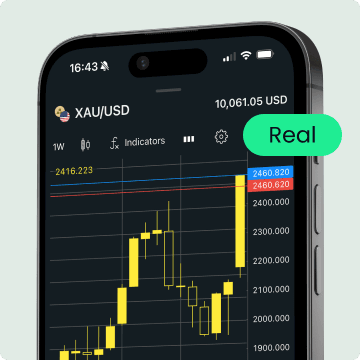
Exness Trade app
Trade with confidence anytime, anywhere.
Gold and the inflation web
Gold remains a safe-haven asset, but its relationship with inflation is what traders must track. Political unrest tends to drive inflation through:
- Increased government spending (e.g., the US military budget now exceeds 900 billion USD).
- Disruption of energy or food supply chains.
- Shifting investor sentiment into hard assets.
That’s bullish for gold—until markets decide the fear has faded or inflation expectations ease. For now, gold’s bullish case remains intact, particularly if central banks signal caution on rate cuts due to ongoing instability.
Compare gold’s movements with 10-year Treasury yields and inflation breakeven rates. If yields drop while gold rises, safe-haven demand will dominate.
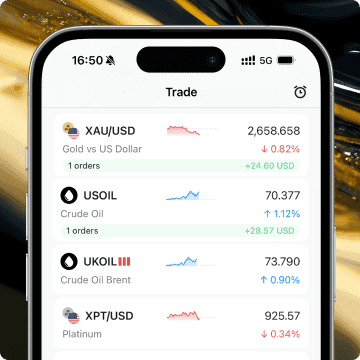
Plan your commodities trades
Use our tools to test your strategy on a free demo account.
FX moves: Safe havens and shock absorbers
USD often strengthens during conflict, especially if US assets are seen as resilient. But don’t ignore JPY and CHF—both have surged historically during global unrest. Keep an eye on:
- USDJPY, often a barometer of risk sentiment, may still work as an early warning system.
- EURCHF could dip if European tensions rise, particularly in reaction to news involving NATO.
Tip: Explore the correlation between USDJPY and global risk indices like VIX for yourself. Consider using VIX spikes as a potential early signal for safe-haven flow into the yen.
Trade forex with an edge
Experience better-than-market conditions. Try live or demo.
European defense stocks and indices
One of the most overlooked trading strategies during conflict is analyzing capital flows into defense-linked indices. Here’s a less-discussed opportunity: defense stocks and the indices they influence. Rheinmetall—a key defense player in Germany—has shown a parabolic rally, and while it's not tradable as a CFD, its impact on the DAX is tangible.
Similarly, increased defense budgets across Europe (in line with NATO targets) could prop up the FTSE 100 and CAC 40, thanks to indirect exposure through contractors and tech suppliers.
Watch DAX and FTSE 100 for volume spikes around major geopolitical announcements. These are sentiment-driven trades. You can use momentum indicators like ADX to confirm trend strength.
Trade stocks with zero commission
Trade the biggest names in tech and industry with low transaction costs.*
Terms and conditions apply.
Tariffs: The silent partner in market volatility
While conflict steals the spotlight, tariffs quietly continue to shape the playing field. President Donald Trump’s return to tariff talk is already influencing investor behavior. As Michael noted, past tariff threats led to capital outflows from US equities and into European markets—hence the DAX’s relative strength. What’s key now is understanding that tariffs don’t act alone.
Combined with conflict, they:
- Fuel inflation
- Redirect capital
- Reshape supply chains
- Shift forex demand
Tariffs aren't just trade policy—they’re monetary disruptors. Monitor trade balance reports and US/EU tariff headlines. If tariffs rise while defense spending increases, expect inflation-sensitive assets (like gold and oil) to react first.
Final thoughts on trading strategies during conflict
The "new normal" isn’t about peace or stability—it’s about adaptation. Markets evolve quickly, and as 2025 unfolds, traders must become geopolitical analysts as much as technical ones. Inflation, conflict, supply disruption, fiscal stimulus, and global alliances now all feed into price action.
Monitor gold, oil, and defense-linked indices for headline-driven entries. Regularly revisit USDJPY, EURCHF, and the DAX for volatility cues. If you're not developing a geopolitical and economic narrative before checking the charts, you might be trading blind.
It’s a wild world right now, but volatility is known to create financial opportunities, especially for traders who are stepping back and looking at the big picture. Add the Insights homepage to your browser favorites to quickly access more deep dives revealing market entry points that every trader is looking for. No matter the asset class, trading strategies during conflict demand a fusion of geopolitical awareness, technical analysis, and macro context. Adaptation is no longer a choice—it’s the edge.
Share:
Related
Q4 2026 earnings season: Can stock market breadth finally improve?
Analysis

Meta's Muse stock shock: Another SaaSpocalypse, or an overreaction?
Events

AAPL stock forecast: Can Apple's $1,999 foldable move AAPL?
Analysis

Trading Pro Q&A: How do you stay consistent through prolonged drawdowns?
Trading Pro Q&A

Exness Trade app
Trade with confidence anytime, anywhere.


Get the app
App title

Trading is risky. T&Cs apply.


