
My 5 best strategies for trading indices and how you can use them


Looking for smarter and straightforward ways to approach trading indices in 2025? Trading specialist and analyst Antreas Themistokleous shares his top strategies, risk tips, and favorite indices to trade.
I started trading indices after realizing they offered more consistency than individual stocks. Instead of dealing with sudden earnings surprises or company-specific news, I could focus on the broader market trend. Indices like the S&P 500 and Nasdaq gave me high liquidity, tighter spreads, and smoother price action. What I wish I knew at the start was how fast indices can move around macro events and how important strict risk management is. Over time, I learned to lean on their advantages while respecting their volatility.
In this guide, I’ll share my five best strategies for indices trading in 2025, along with practical tips you can apply right away.
Content
- What are indices in trading, and why do they matter?
- My favorite indices to trade and why
- How I trade stock indices: My step-by-step routine
- My go-to strategies for trading indices
- How much I started with—nd what I recommend now?
- My top risk management rules
- The mistakes I made when I started (So you don’t have to)
- Frequently asked questions about trading indices
- Key takeaways
- Final thoughts: Why I continue indices trading in 2025 and beyond
What are indices in trading, and why do they matter?
A simple explanation of indices
An index is a basket of stocks grouped together to represent a portion of the market. Instead of trading one company, you’re trading the overall performance of that group. The S&P 500, for example, tracks 500 of the largest US companies. When I trade indices, I’m essentially speculating on the direction of an entire market segment, not a single stock.
For a step-by-step overview, check out this guide and Michael Stark’s perspective on learning to trade indices.
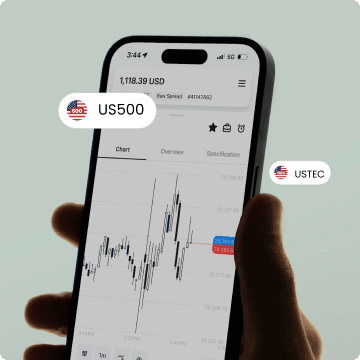
Access top global indices
Trade leading stock indices across the US, UK, China, Germany, and Japan, with ultra-fast execution and low and stable spreads.*
Spreads may fluctuate and widen due to factors including market volatility, news releases, economic events, when markets open or close, and the type of instruments being traded.
Real-world examples: The indices I watch daily
My focus is on liquid, widely traded, and popular indices. The S&P 500 is my go-to for steady moves and strong technical setups. The Nasdaq 100 offers higher volatility and sharper swings, great for intraday trading. I also watch the Dow Jones index for a different pace, and occasionally the DAX in Europe when I want exposure outside the US.
Why indices are perfect for learning market behavior
Trading indices taught me more about price action than individual stocks ever could. Indices smooth out the noise of single-company events, so trends and reversals appear cleaner. They also react directly to macro news, interest rates, inflation data, and earnings season sentiment. If you want to understand how markets move as a whole, indices are the perfect training ground.
My favorite indices to trade and why
The top 5 indices I trade most often
Over the years, I’ve experimented with many different markets, but I consistently come back to a handful of popular indices that offer the best balance of liquidity, volatility, and technical clarity. At the top of my list is the S&P 500, which provides steady price movements and responds exceptionally well to technical setups like breakouts and pullbacks. The Nasdaq 100 comes next, and it is my go-to when I want higher volatility and larger intraday swings that present more frequent scalping and day-trading opportunities. I also trade the Dow Jones Industrial Average (DJIA), which tends to move in a slightly slower rhythm compared to the Nasdaq but still delivers plenty of reliable setups. Beyond the US, I often look at the DAX in Germany, as it offers great liquidity during the European session and moves strongly on economic data releases. Finally, the FTSE 100 gives me exposure to the UK market, and while it is less volatile than the Nasdaq or DAX, it still provides consistent opportunities when I want a steadier pace.

What makes indices trading worth it
Not every index is worth my time, and I have a clear set of criteria before adding one to my watchlist. The first thing I look at is liquidity; if the index doesn’t have enough volume and depth, I will not bother trading it, no matter how appealing the chart looks. I also study how cleanly the index respects technical levels such as support, resistance, and trendlines. Stock market indices that respond to these levels in a predictable way make my strategies far more effective. Another factor is market hours and volatility windows. I want to know exactly when an index offers its best price movements, whether it is the US open for the S&P and Nasdaq or the European morning for the DAX. If an index provides clear price action, high liquidity, and opportunities during my preferred trading hours, it makes the cut.
My take on volatility, spreads, and liquidity
When CFD trading indices, I’ve learned that volatility is both a friend and an enemy. It creates opportunity by generating strong intraday price movements, but it also magnifies risk if you are not disciplined. That is why I prefer stock market indices that balance volatility with liquidity, because deep markets with tight spreads allow me to enter and exit with precision. For example, the Nasdaq’s price movements are often aggressive, but because it is so liquid, I can still manage risk effectively. On the other hand, if I were to trade a thinly traded index with wide spreads, I would lose a significant edge right out of the gate. Spreads matter just as much as volatility; even a one- or two-point difference can add up quickly when you are taking multiple trades. Liquidity ensures that I can get filled where I want, volatility creates the setups I need, and tight spreads allow me to manage costs; all three must work together for an index to be truly worth trading.
How I trade stock indices: My step-by-step routine
What tools and platforms do I use?
For charting, I rely on TradingView because of its clean interface, customizable indicators, and real-time data. When execution speed matters most, I use the Exness Terminal platform to place trades with one-click order execution. My setup also includes multiple monitors so I can track price action, economic news, and higher-timeframe charts simultaneously.

My pre-trade checklist
Before I take any trade, I follow the same routine: I check the economic calendar for news, mark key support and resistance zones on higher timeframes, and align my scalping or day-trading indicators on lower charts. I also confirm volatility levels; if spreads are wider than normal or liquidity looks thin, I stay cautious.
If you want more fundamentals on preparing for short-term trades, see this essential day trading guide.

How I decide when to enter or sit out
I only enter when price action aligns with my plan, trend direction, good indicator confirmation, and clean risk levels. If the setup feels forced, I don’t trade; sitting out is part of the process. The key is discipline: I trade when the odds stack up, and I pass when the market is choppy or unclear.
My go-to strategies for trading indices
No.1 Trend trading: How I ride momentum
When stock market indices trend, I rely on moving averages like the 50 and 100 simple moving averages to confirm direction and guide entries. I take pullbacks into these levels as long as the overall momentum remains intact. If price holds above in an uptrend or below in a downtrend, I stay with the move until momentum shows signs of exhaustion.

No.2 Breakout setups: What I look for
Breakouts work best after periods of consolidation. I watch for tight ranges, compression in Bollinger Bands, or flat moving averages, and then wait for a surge in volume to confirm the breakout. I avoid fakeouts by looking for continuation candles and follow-through, not just one quick spike.

No.3 Range trading: When I switch gears
When stock indices are stuck between defined support and resistance levels, I adjust and trade the range. I look to fade the extremes, taking longs near support and shorts near resistance, with tight stops just outside those zones. This approach works well on indices like the FTSE 100, which often respect horizontal levels.
No.4 Scalp trades: My quick-fire approach
For scalping, I drop to very low timeframes, such as the 1- or 3-minute chart. I focus on fast moves around short-term moving averages, aiming for just a few points at a time. Discipline is key here, and entries are sharp, stops are tight, and exits come quickly.
For a broader toolkit, see my article on the best indicators for day trading.
No.5 News-based indices trading: How I trade market reactions
Major economic releases like NFP (Nonfarm payrolls), CPI (Consumer Price Index), or Fed decisions move indices violently. Instead of predicting, I react to what unfolds. Once the initial volatility settles and spreads normalize, I look for continuation trades in the direction of the move or reversal setups if the spike was overextended.
Technical indicators that I trust
I keep my toolkit simple. For example, Moving Averages help me track trend direction, RSI (Relative Strength Index) highlights overbought or oversold conditions, Bollinger Bands give me a read on volatility, and Fibonacci retracement levels give me clarity without cluttering the chart.

How much I started with—nd what I recommend now?
The minimum, I think, you need to start with
When I first began index trading, I underestimated how quickly small accounts could be wiped out by volatility and leverage. If I had to start over, I would recommend at least a few thousand dollars for futures or CFDs, and ideally more if you want breathing room. While brokers advertise low minimum deposits, CFD trading indices with a very small account force you to take outsized risks just to make meaningful gains, which usually ends badly. A realistic minimum gives you the flexibility to size positions properly and survive the inevitable drawdowns.
How to grow a small account trading indices
If you are starting small, the key is patience and consistency. I focused on building slowly by risking a fixed percentage per trade, often less than one percent, and compounding over time. Rather than swinging for home runs, I treated growth as a steady climb, taking high-probability setups and avoiding overtrading. Small accounts can grow, but only if you trade with discipline, respect risk, and accept that doubling the account overnight is not a realistic plan.
What I learned about margin and leverage the hard way
Margin and leverage are what make index trading both attractive and dangerous. Early on, I made the mistake of overleveraging, thinking I could multiply returns quickly. Instead, it multiplied my losses and nearly blew up my account. What I learned is that leverage should be treated as a tool for flexibility, not as a shortcut to fast profits. Using only a fraction of the available leverage and understanding margin requirements are non-negotiable if you want to stay in the game long term.
My top risk management rules
How I set my stop losses and targets
I always place stop losses at technical levels that prove my trade idea wrong, not just at arbitrary distances. For targets, I aim for setups that give me at least equal reward to risk, with a preference for trades that can deliver two or three times more. Stops and targets are set before I click buy or sell, so emotions never dictate the outcome.
When I avoid trading altogether
I stay out when financial markets are flat, liquidity is thin, or price action is erratic. I also avoid trading if I’m distracted or not mentally sharp, because trading half-focused is the fastest way to make mistakes. Skipping a bad trading day protects capital just as much as a profitable trade grows it.
How I manage risk during high-impact news
Around major releases like NFP or central bank statements, I either cut my size down to a fraction of normal or stay completely flat until the dust settles. Volatility during news can be extreme, and it’s easy to slip or stop out. My rule is simple: protect capital first, trade opportunities second.

The mistakes I made when I started (So you don’t have to)
Blowing up small accounts
Early on, I underestimated how fast losses can mount when indices trading with too little capital. I overleveraged, ignored spreads, and took positions that were too large for my account size. The result was near-disaster and a lot of wasted time. The lesson I learned is that starting small is fine, but you have to size positions sensibly and respect volatility to survive the learning curve.
Index trading without a plan
I often entered trades based on instinct or a gut feeling rather than a structured plan. Without predefined entries, stops, and targets, I let emotions dictate my decisions, which consistently led to losses. Having a clear strategy before touching the market makes all the difference in consistency and confidence.
Overtrading and revenge trades
When I lost, I had a habit of trying to claw it back immediately. Overtrading and taking revenge trades only increased my losses and eroded discipline. I learned that stepping back, reassessing setups, and sticking to my plan is far more profitable than chasing losses or forcing action.
Tap into global market trends
Explore top indices with low and stable spreads.*
Spreads may fluctuate and widen due to factors including market volatility, news releases, economic events, when markets open or close, and the type of instruments being traded.
Frequently asked questions about trading indices
Can you really earn money trading indices?
Yes, trading indices can be profitable, but it requires discipline, a well-defined strategy, and strict risk management. Indices offer consistent trends and technical setups, but they are not a shortcut to instant profits. Success comes from repeated execution of high-probability trades while managing losses effectively.
What’s the best time of day to trade?
The most active periods tend to be at the market open, around major economic releases, and during the overlap of major trading sessions, such as the US and European markets. These windows provide higher volatility and liquidity, which are essential for executing trades efficiently and capturing meaningful moves.
Is it better to trade CFDs, ETFs, or futures?
Each instrument has pros and cons. CFDs offer flexibility and smaller capital requirements, ETFs provide straightforward market exposure without leverage, and futures deliver the tightest spreads and highest liquidity but require larger accounts. The choice depends on your capital, risk tolerance, and preferred index trading style.
Which indices are best for beginners?
For beginners, I recommend starting with highly liquid and widely followed indices like the S&P 500 or the Dow Jones Industrial Average. They offer cleaner price action, tight spreads, and plenty of technical setups to learn from, making them ideal for building skills before moving on to more volatile indices like the Nasdaq 100 or DAX.

Key takeaways
- Indices smooth out stock-specific noise: Instead of reacting to single earnings reports from companies listed on an exchange, trading indices let you focus on broader market sentiment and how the index tracks the performance of the overall market.
- Liquidity, spreads, and trading hours define the edge: The most popular indices like the S&P 500, Nasdaq 100, and FTSE 100 are in liquid markets, with tight spreads and clear volatility windows. Knowing when an index offers its best trading hours is critical for consistent execution.
- Index composition matters for strategy: The index’s composition, whether it is a price-weighted index like the Dow Jones or one based on market capitalization, affects how index prices move when the biggest companies shift. Understanding what drives the value of an index helps you adapt your approach.
- Risk management is non-negotiable: From setting disciplined stop losses to respecting leverage, surviving an index falls scenario means protecting capital first. Tools like negative balance protection in CFD trading indices help safeguard against extreme moves.
- Adapting to conditions keeps you in the game: Whether you trend trade, scalp, or fade ranges, choosing the right setup depends on how the index tracks the market’s performance in real time. Sitting out when conditions are unclear protects both account health and existing positions.
- Leverage magnifies both wins and mistakes: Indices can move fast, especially around macro events. Since many instruments are price weighted, overleveraging can turn small shifts in index prices into big losses. Treat leverage as flexibility, not a shortcut.
- Indices are ideal for long-term learning: Watching how the biggest companies shape movements in major indices offers a deeper understanding of market behavior. For those who want to trade systematically, indices provide clean setups that reflect the health of entire sectors and economies.
Final thoughts: Why I continue indices trading in 2025 and beyond
Indices trading remains a core part of my strategy because it allows me to capture broad market trends while managing risk more effectively than trading individual stocks. The structure, liquidity, and predictable price behavior of indices give me a reliable edge that I can scale over time and across different market conditions.
Trading indices is worth it even in 2025. Market volatility, macro events, and institutional activity continue to create opportunities for disciplined traders. The key is having a solid strategy, understanding risk, and sticking to your plan rather than chasing every spike.
For beginners, my advice is simple: start small, focus on liquid indices like the S&P 500 or Dow, and spend time learning price action and technical setups. Consistency and discipline will beat luck every time.
If you want a platform that supports fast execution, deep liquidity, and access to top indices, I recommend checking out Exness. Their infrastructure makes it easier to apply these strategies in real time and focus on what matters most: trading effectively.
Share:
Related


Exness Trade app
Trade with confidence anytime, anywhere.


Get the app
App title

Trading is risky. T&Cs apply.


