
Understanding CFDs: What is CFD trading and how does it work


CFDs let traders speculate on market price movements without owning the underlying asset. In this guide, Haikel Ali explains how CFD trading works, why traders use it in various markets, such as forex or commodities, and what risks beginners should understand first.
If you’ve spent any time exploring online trading, you’ve probably come across the term CFDs. They’re often described as flexible, fast-moving, and powerful—but also risky and complex.
So what are CFDs really? And how does CFD trading actually work in practice?
In this guide, we’ll break it down clearly and simply. It will explain what CFDs are, how traders use them across markets like forex, and why they’ve become such a popular tool for short-term speculation. More importantly, this article will narrow down what separates casual traders from those who actually learn to use CFDs effectively.
Content
- What are CFDs?
- What is CFD trading?
- How CFD trading works in practice
- What is CFD trading in forex?
- The role of leverage in CFD trading
- Costs that affect your trades
- Why CFD trading attracts so many traders
- The reality: Why many beginners struggle
- From basic understanding to real skill
- Final thoughts on what are CFDs
- Frequently asked questions on CFD trading
Key takeaways
- CFDs are contracts based on price movements. A contract for difference lets traders speculate on the price of an underlying asset without owning it.
- CFD trading enables access to global financial markets. Traders can take CFD positions across stocks, forex CFDs, commodities, and indices on a trading platform.
- CFD trading works by going long or short. Traders profit or lose depending on whether the market rises or falls after opening a position.
- Leverage increases both opportunity and risk. In leveraged CFD trading, traders can control a larger position with a smaller deposit, but losses can grow quickly.
- Successful CFD trading requires risk management strategies. Understanding trading costs, market volatility, and discipline is key to making informed trading decisions.
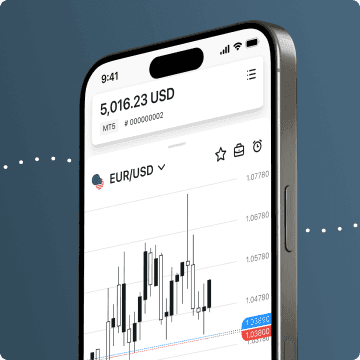
Trade the world's top currencies with Exness
Get tight and stable spreads on every currency trade.
What are CFDs?
CFD stands for Contract for Difference, and at its core, it’s a very simple idea.
A CFD is an agreement between the trader and a broker to exchange the difference in the asset’s price between the moment a trader opens a trade and when they close it.
That’s it.
There’s no ownership involved. You’re not buying shares, holding physical gold, or exchanging currencies. You’re simply trading on price movement.
This is one of the defining characteristics of CFDs and also one of the reasons they’re so widely used. Instead of dealing with the logistics of asset ownership, traders can focus entirely on whether a price is likely to increase or decrease.
What is CFD trading?
Once you understand the contract itself, the next step is understanding what CFD trading is.
CFD trading is the act of speculating on financial markets using these contracts. Rather than investing for the long term, traders typically use CFDs to take advantage of short-term price movements.
What makes this particularly appealing is the range of markets available. From a single platform, participants can trade stocks, global indices, commodities like gold and oil, cryptocurrencies, and—most commonly—forex.
This ability to move between markets without needing separate accounts or large capital commitments is a big part of what draws people in.
But access alone isn’t what makes CFD trading interesting. It’s how trades are structured.
How CFD trading works in practice
Every CFD trade begins with a simple question: Does the analysis indicate that the price will rise or fall?
If a trader believes the price will go up, they open a buy (long) position. If they think it will fall, they open a sell (short) position.
This ability to trade in both directions is one of the biggest differences between CFD trading and traditional investing. In investing, profits are usually tied to growth. In CFD trading, movement is what matters—not direction.
To make this clearer, imagine looking at the gold price. If gold is trading at 2,000 USD and a trader expects it to rise, they buy a CFD. If the price increases to 2,020 USD and they close their position, the profit is based on that 20 USD movement.
If the price had fallen instead, they would have experienced a loss.
It’s a straightforward mechanism, but the implications become more complex once leverage and costs come into play.

What is CFD trading in forex?
Forex trading is one of the most active and widely traded markets in the world, and CFDs are a common way to access it.
So, what is CFD trading in forex?
It’s simply trading currency pairs using CFDs instead of physically exchanging currencies. When trading EURUSD, for example, traders speculate on whether the euro will strengthen or weaken against the US dollar.
If they think the euro will rise, they buy the pair. If they think it will fall, they sell it.
The appeal of forex CFDs lies in the market’s constant movement. Currency prices fluctuate throughout the day, creating opportunities for traders who know how to interpret those movements. Combined with the ability to trade both long and short, forex becomes a highly dynamic environment.
However, it’s also one of the fastest ways to experience how quickly things can go wrong without proper understanding.
The role of leverage in CFD trading
One of the most talked-about aspects of CFDs is leverage—and for good reason.
Leverage allows traders to control larger positions with a relatively small amount of capital. Instead of paying the full value of a trade, they need to deposit a fraction of it, known as margin.
On the surface, this makes trading more accessible. With a smaller account, traders can gain exposure to larger market movements.
But this is where many beginners misunderstand what’s happening.
While the initial deposit is small, profit or loss is calculated on the full position size. That means even small market movements can have a significant impact on a trader’s account.
When markets move in a trader’s favor, leverage can amplify gains. When they don’t, losses can accumulate just as quickly.
This is why leverage is often described as a double-edged sword—and why understanding it properly is critical before placing any real trades.
Leverage isn’t just about trading bigger
Leverage is often misunderstood as simply a way to open larger trades. But in practice, one of its most useful functions is its ability to help traders manage and distribute risk more effectively.
Rather than concentrating all available capital into a single position, leverage allows traders to spread exposure across multiple markets and assets. This creates flexibility in how risk is allocated within a trading strategy.
For example, instead of placing an entire account on one trade, a trader may choose to divide exposure across forex, commodities, or indices and use leverage to maintain smaller margin requirements for each position.
Of course, this does not reduce the risks associated with leveraged CFD trading itself. Losses can still accumulate quickly if positions are poorly managed. But when used carefully, leverage can support a more balanced approach to market exposure rather than simply increasing position size.
This is one of the distinctions that separates impulsive trading from a more structured and professional approach to CFD trading.

Costs that affect your trades
CFD trading isn’t free, and the costs involved can quietly influence your results over time.
Most trades include a spread, which is the difference between the buy (bid) and sell (ask) price. This is often the primary cost and is built directly into the trade. In some cases, depending on what type of trading account you choose to open, there may also be commission charges.
If a position is held overnight, traders typically encounter a funding charge (swap). This reflects the cost of maintaining a leveraged position over time.
There are also less visible factors, like slippage, where a trade executes at a slightly different price than expected—usually during periods of high volatility.
Individually, these costs may seem small. But over multiple trades, they can add up, which is why experienced traders factor them into their decision in choosing which brokers to trade with, as well as their risk management, when executing trades.

Why CFD trading attracts so many traders
At this point, you can probably see why CFDs have gained so much attention.
They offer a combination of flexibility and access that’s hard to match. Traders can trade global markets from one platform, take positions in either direction, and start with relatively modest capital.
For many, that’s an appealing proposition.
There’s also a certain immediacy to CFD trading. Markets move constantly, and opportunities can appear at any time. For traders who enjoy active decision-making and trading styles such as scalping, this creates an engaging and dynamic environment.
But this same flexibility is also what makes CFDs challenging.
The reality: Why many beginners struggle
It’s easy to understand what CFDs are. It’s much harder to use them consistently.
Many beginners approach CFD trading with a basic understanding of how trades work, but without a structured approach. They open positions based on instinct, use too much leverage in a single trade, and underestimate how quickly losses can accumulate.
Over time, this leads to frustration—and often to losses that could have been avoided.
The difference between those who struggle and those who progress usually comes down to one thing: how seriously they approach learning the skill.
CFD trading isn’t just about knowing definitions or placing trades. It’s about understanding market behaviour, managing risk, and developing discipline over time.
From basic understanding to real skill
Up to this point, this article has covered the foundations.
Understanding what CFDs are, how CFD trading works, and how it applies to markets like forex. While the concept is simple, the execution requires much more than just basic knowledge.
This is where many people stop.
But for those genuinely interested in trading, this is where things start to get interesting.
Once a trader moves beyond the basics, the focus shifts from “what is CFD trading” to “how do I actually do this well?”
Trading glossary
Bid Price
The bid price is the price at which a trader can sell a CFD position. In CFD trading, it forms part of the spread and directly affects your entry and exit when trading CFDs.
Initial Margin
Initial margin is the minimum deposit required to open a leveraged CFD position. It allows traders to control a larger position in financial markets while only committing a fraction of the total trade value.
Maintenance Margin
Maintenance margin is the minimum amount of funds that must be kept in a trading account to maintain open CFD positions. Falling below this level can trigger a margin call or automatic position closure.
Overnight Financing Fees
Overnight financing fees are charges applied when trading CFDs and holding a leveraged position beyond the trading day. These fees reflect the cost of maintaining market exposure over time.
Counterparty Risk
Counterparty risk refers to the possibility that your CFD broker or provider cannot fulfil their side of the CFD contract. This is why choosing regulated CFD providers is important for retail investors.
Market Volatility
Market volatility describes how quickly and unpredictably prices move in financial markets. High volatility can create trading opportunities, but it also increases the risk of losing money rapidly.
Currency Pair
A currency pair represents the value of one currency against another, such as EURUSD. In forex CFDs, traders speculate on the price movements of these pairs without owning the underlying currencies.
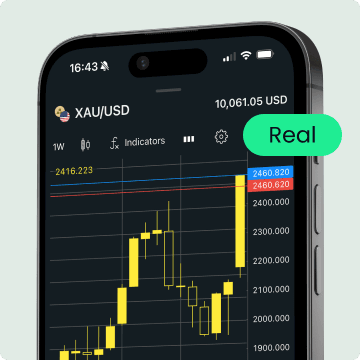
Exness Trade app
Trade with confidence anytime, anywhere.
Final thoughts on what are CFDs
CFDs are powerful tools. They give traders access to global markets, allow flexibility in how positions are taken, and open up opportunities in both rising and falling conditions.
But they’re not shortcuts.
Understanding what are CFDs and what is CFD trading is only the first step. What matters is how that knowledge is applied in real market conditions.
For those willing to approach it with the right mindset—learning, practising, and managing risk—CFD trading can become a skill worth developing.
And, like any skill, the difference comes from how deeply a trader chooses to learn it.
Frequently asked questions on CFD trading
What are CFDs in simple terms?
CFDs, or contracts for difference, are financial instruments that allow traders to speculate on the price movements of an underlying asset without owning it. Instead of buying them on a stock exchange, you enter a CFD contract with a broker based on the opening and closing prices.
How does CFD trading work?
CFD trading works by opening positions based on whether you think a market will rise or fall. When trading CFDs, your profit or loss is determined by the difference between the buy and sell price, multiplied by the trader’s position size.
What is CFD trading in forex?
CFD trading in forex involves speculating on currency pairs such as EURUSD using a CFD trading platform. Forex CFDs enable traders to gain market exposure to global markets without physically exchanging currencies.
Is CFD trading risky for beginners?
Yes, CFD trading is considered high risk because leverage can amplify both potential profits and losses. Market volatility, trading costs, and poor risk management strategies can lead to losing money rapidly, especially for inexperienced traders.
What costs are involved when trading CFDs?
Common CFD trading costs include spreads (the difference between the bid price and the sell price), commissions on some assets, and overnight financing fees for leveraged positions. These trading costs can impact overall profitability and should be considered when making informed trading decisions.
Are CFDs better than traditional investing?
CFDs are different from traditional investing. While investing focuses on long-term ownership of assets, CFD trading is designed for short-term speculation on price movements and typically involves higher risk.
What is the difference between CFDs and futures contracts?
Both are derivatives, but CFDs usually have no fixed expiry and are traded directly with a CFD provider, while futures contracts have set expiration dates and are traded on exchanges.
How do you choose a CFD broker?
When selecting a CFD broker, consider regulation, trading costs, platform features, available markets, and risk management tools. A reliable broker should provide transparency and strong client protection.
Share:
Related


Exness Trade app
Trade with confidence anytime, anywhere.


Get the app
App title

Trading is risky. T&Cs apply.


