
How to perform a stock market data analysis for smarter trading


How can stock market data analysis help traders make smarter moves? In this article, we’ll explore how data analytics in stock market trends can guide confident decisions.
In today’s fast-moving financial world, traders need more than gut feeling—they need data analytics in the stock market to guide every move. Whether you're buying shares, managing risk, or timing your exit, the ability to interpret and apply data is what separates confident traders from the rest.
That’s where stock data analysis steps in. By learning how to break down price trends, volume, volatility, and historical performance, beginner traders can gain an edge. In this article, we’ll walk you through how to read the numbers, what tools to use, and how Exness makes data-driven trading accessible and intuitive for everyone—from LATAM to MENA and from SSA to India.
Content
- What is stock market data, and why does it matter
- How to access stock market data as a beginner
- The basics of analyzing stock market data
- Technical vs fundamental analysis explained
- How to start using data in your trading strategy
- Common mistakes beginners make with data analysis
- Key takeaways
- Final thoughts on mastering stock market data analysis
What is stock market data, and why does it matter
Defining stock market data
Stock market data refers to all the numerical information generated by the buying and selling of stocks on exchanges. It includes current prices, historical data, trading volume, and more. This data is the foundation of every trading decision, helping you track what’s happening in the markets.
For a beginner, stock market data might seem overwhelming, but understanding it is key to confident trading. It eliminates guesswork and replaces emotion with logic. That’s the core of smart stock market data analysis—making informed moves based on facts and not feelings.
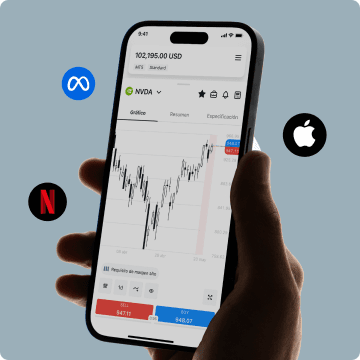
Invest in the world’s biggest market movers
Trade stocks of the most successful global tech and industry giants.*
Terms and conditions apply.
Types of stock market data: Price, volume, fundamentals, technicals
There are several main types of data that traders look at:
- Price: How much a stock costs at a given moment. Price data also includes the open, high, low, and close values over a timeframe.
- Volume: The number of shares traded in a session. Spikes in volume can signal important market activity or investor sentiment shifts.
- Fundamentals: This includes financial indicators like earnings, balance sheets, and management quality. Investors use this to assess a company’s long-term potential.
- Technicals: These are patterns or signals from price and volume charts, such as moving averages or RSI. They are used for short-term decision-making.
Understanding how to read and combine these data types is central to mastering data analytics in stock market environments.
Why traders and investors rely on this data
Simply put, traders and investors rely on stock market data because it reveals what the market is doing and helps predict what might happen next. Whether it’s identifying a breakout trend using technical indicators or analyzing a company’s past earnings from historical stock price data, the insights gained can reduce risk and improve timing.
No matter where you're trading from, performing solid stock data analysis gives you a measurable edge in the markets.
How to access stock market data as a beginner
Free vs paid data sources
There are both free and paid stock market data sources available. Free options are great for learning the basics and doing casual stock data analysis. Websites like Yahoo Finance, Google Finance, and MarketWatch offer real-time quotes, historical data, and basic charting tools—perfect for beginners testing the waters.
Paid sources usually offer deeper data and advanced analytics. Services like Bloomberg Terminal or Morningstar provide in-depth financial reports, faster data feeds, and professional-grade charting. These are ideal for experienced traders or institutional investors who need a competitive edge when conducting a stock market data analysis.
For most new traders, starting with free tools is more than enough—especially if your focus is learning and experimenting before putting serious capital to work.
Using stock platforms and brokerages
Using your broker’s platform also means the data is tailored to the assets you're actually trading, saving time and reducing confusion. Plus, most brokers offer demo accounts, allowing you to practice in real-time with simulated funds.

Key tools and websites to explore
Here are some beginner-friendly tools and platforms for performing a stock market data analysis:
- Exness Terminal – Real-time price and volume data, integrated analytics, and historical charts.
- TradingView – Widely used for technical analysis, with both free and paid tiers.
- Yahoo Finance – Great for pulling up quick stock overviews and historical stock price data.
- Investing.com – Offers news, calendars, and basic charting tools across global markets.
Exploring a mix of these platforms will help you build your confidence and sharpen your stock market data analysis skills.
The basics of analyzing stock market data
Understanding trends, patterns, and indicators
At the heart of stock market data analysis is the ability to recognize what the data is telling you. One of the first things to look for in a chart is the trend—whether the stock is generally moving up (bullish), down (bearish), or sideways. Recognizing trends helps you avoid trading against the market's direction.
Patterns are recurring formations in price charts that signal potential moves. Some common ones include head and shoulders, triangles, and double bottoms. These patterns often appear across different markets, making them reliable tools for both new and experienced traders.
Indicators are tools applied to price or volume data to help clarify what the trend or momentum is doing. Technical indicators like moving averages, RSI, and MACD are essential in short-term trading, as they help you decide when to enter/exit trades.

Common metrics: P/E ratio, moving averages, RSI, MACD
When diving into data analytics in stock market trading, a few metrics pop up repeatedly:
- P/E Ratio (price-to-earnings): Tells you how much investors are paying for each dollar of earnings. A high P/E might mean the stock is overvalued or that investors expect strong future growth.
- Moving averages: Smooth out price data to highlight trends. A 50-day or 200-day moving average is commonly used to judge long-term momentum.
- Relative strength index: RSI measures whether a stock is overbought or oversold. A score above 70 may indicate overbought conditions, while a score below 30 could mean it's oversold.
- Moving Average Convergence Divergence: MACD combines moving averages to signal trend reversals. Traders look for crossovers to decide when to buy or sell.
These metrics help you stay on course and avoid surprises.
How to interpret charts and graphs
Charts transform raw stock market data into visual insights. Candlestick charts are especially popular, showing open, close, high, and low prices in one simple format. A blue or green candle usually means the price closed higher than it opened; red means the opposite.
Look for patterns over time. Is the price bouncing off a support level? Are the highs getting higher? Zooming out to examine historical stock price data gives context to current movements.
As a beginner, you should practice reading charts daily, even if you're not yet trading. It’s one of the fastest ways to develop your instincts and start spotting trade-worthy setups.

Technical vs fundamental analysis explained
What is technical analysis, and who uses it
Technical analysis is the study of price movements and trading volume through charts and indicators. It’s widely used by short-term traders who want to capitalize on momentum, volatility, and patterns. These traders rely on tools like RSI, MACD, Bollinger Bands, and moving averages to guide their entries and exits.
The idea behind technical analysis is that all current market information is already reflected in a stock’s price. Instead of focusing on a company’s financials or earnings reports, traders analyze stock market data to spot trends and predict future moves. If you’re looking to make quick trades, this method helps you act fast and stay in sync with market sentiment.
Day traders, swing traders, and even algorithmic traders frequently rely on this approach because it’s data-driven and adaptable to any market, including those in LATAM, MENA, SSA, and Asia.
What is fundamental analysis, and when is it most effective
Fundamental analysis takes a longer-term view. It involves studying a company’s financial health, industry position, and broader economic factors to assess whether its stock is undervalued or overvalued.
Key indicators in data analytics in stock market trading include earnings per share, return on equity, debt-to-equity ratio, and revenue growth. This method is especially useful for investors who are planning to hold a stock for months or even years.
If you’re investing in a company because you believe in its long-term success, fundamental analysis is your go-to.
How to combine both for better trading decisions
Many smart traders combine technical and fundamental analysis to make more informed decisions. For example, a trader might use fundamental data to choose strong companies and then apply technical indicators to time their buy or sell.
Looking at historical stock price data alongside earnings reports, or using RSI to enter a fundamentally solid stock at a discount, gives you a balanced strategy. Using both methods allows you to trade with greater confidence and precision.
How to start using data in your trading strategy
Setting clear goals and risk tolerance
Before diving into charts and numbers, take a step back and define your trading goals. Are you trading to build long-term wealth, generate short-term income, or simply learn how financial markets work? Your objective will shape your entire approach to stock market data analysis.
Equally important is understanding your risk tolerance—how much you’re willing to lose on a single trade or over time. For example, a conservative trader may stick to stable, low-volatility stocks, while someone with a higher risk appetite might explore growth or speculative stocks.
Knowing your goals and risk limits helps you choose the right data points. A long-term investor may examine company fundamentals more closely, while a short-term trader may prioritize technical indicators and price action.
Using screeners and filters to find stocks
Stock screeners are powerful tools for narrowing down opportunities based on specific criteria. Whether you're using Exness or something else, screeners let you filter stocks by metrics like market cap, price-to-earnings ratio, RSI, volume, and sector.
For example, if you want to find undervalued stocks with strong earnings, you can filter by low P/E ratios and high earnings per share growth. If you're looking for momentum trades, you might screen for stocks with high volume and recent price breakouts.
Using data this way transforms your strategy from reactive to proactive—it’s one of the most effective ways to apply data analytics in stock market trading.
Building a simple analysis workflow
Start small. A basic workflow could look like this:
- Use a screener to find candidates that meet your criteria.
- Pull up historical stock price data to look for trends or support/resistance zones.
- Apply 2–3 technical indicators to evaluate timing.
- Check key fundamentals (like revenue and debt) for added confidence.
- Set a risk level and define your entry, stop loss, and take profit levels.
Consistency is key. Over time, this workflow will help you trade with clarity and confidence, giving you a strong grip on the data behind every decision.
Common mistakes beginners make with data analysis
Overcomplicating analysis with too many indicators
One of the most common traps for new traders is loading up their charts with every possible indicator. It might feel like you’re being thorough, but too many signals can create confusion and conflict. If RSI says “buy” but MACD says “sell,” what do you do?
A better approach is to focus on two or three trusted tools that align with your trading style. For example, using a moving average for trend direction and RSI for entry points is a simple yet effective combination. Keep it clean and clear—effective stock market data analysis is about precision, not clutter.

Relying on outdated or incomplete data
Making decisions based on old or partial data can lead to bad trades. Always double-check that you're using the most up-to-date and relevant information, especially during volatile market conditions.
Platforms like the Exness Terminal provide real-time stock market data, which is crucial for reacting quickly and accurately. Delayed data might work for historical studies, but not for active trading.
Ignoring risk management
Even the best data can't protect you if you don’t manage your risk. A strong setup can still go against you, so use stop losses and position sizing to limit potential losses. Stock data analysis isn’t just about finding the best trade—it’s also about protecting your capital when things don’t go as planned. Ignoring this part of the stock market data analysis process is a critical beginner mistake.
Trade stocks with zero commission
Trade the biggest names in tech and industry with low transaction costs.*
Terms and conditions apply.
Key takeaways
- Stock market data analysis is essential for informed trading decisions: By interpreting price data, volume data, and market indicators, traders and investors can better understand market dynamics, price movements, and company performance.
- Different types of stock market data provide unique insights: Price trends, trading volume, financial statements, and technical indicators all help in analyzing stocks and refining a trading or investment strategy.
- Access to reliable market data is easier than ever: Platforms like Exness, TradingView, and Yahoo Finance provide real-time stock prices, historical data, and actionable insights for anyone analyzing market trends.
- Analyzing market trends builds trader confidence: Using tools such as RSI, MACD, and moving averages, technical analysts can identify patterns, predict future movements, and make more informed trading decisions.
- Both fundamental and technical analysis have value: Combining equity analysis with sentiment analysis, earnings ratios, and market activities gives a comprehensive view of a trading instrument, supporting stronger market analysis.
- Clear goals and risk management strengthen your investment strategy: Define your objectives, understand potential risks, and use stop losses and exit points to protect capital in different market conditions.
- Avoid common beginner mistakes in stock analysis: Don’t overload charts with too many indicators, rely only on outdated numerical data, or ignore key ratios from a company’s financial statements when analyzing stocks.
- Consistency and practice are key tools for growth: Reviewing trades, following financial news and press releases, and refining your approach through data analysis will help you identify trends, understand investor behavior, and improve over time.
Final thoughts on mastering stock market data analysis
Mastering stock market data analysis doesn’t happen overnight, but even a basic understanding can instantly improve your trading decisions. From spotting trends to interpreting earnings reports, using data helps you trade with purpose. The real benefit of using data wisely is clarity. It helps you manage risk, time your entries, and build confidence in every trade. Whether you're analyzing historical stock price data or filtering stocks with technical indicators, every step brings you closer to a strategy that works.
Remember, every successful trader was once a beginner. The key is to keep practicing, reviewing your trades, and refining your approach. Over time, your skills will evolve, and so will your results. Start simple, stay consistent, and trust the data.
Share:
Related


Exness Trade app
Trade with confidence anytime, anywhere.


Get the app
App title

Trading is risky. T&Cs apply.


