


An introduction of stock exchange concepts helps beginner traders understand where and how global markets operate and why that matters to a trading strategy.
If you're new to the financial world, an introduction to stock exchange principles might seem complex at first, but understanding them is one of the most important steps in becoming a successful trader. Whether you're in Latin America, the Middle East, Africa, or Asia, knowing how stock exchanges function can help you navigate markets confidently and make smarter trading decisions.
In this article, I’ll walk you through how stock exchanges work, how they relate to commodities, why market news and risk matter, and how brokers like Exness give you the tools to act on this information. From an introduction to stock market mechanics to understanding how stock prices are formed and the role that CFD trading plays, this article breaks everything down in a simple and actionable way.
Content
- What is a stock exchange?
- How stock exchanges operate
- Types of stock exchanges
- How companies get listed on a stock exchange
- Key participants in the stock exchange
- How stock prices are determined
- Risks and rewards of investing in the stock market
- Frequently asked questions about CFD trading vs investing in stocks
- Key takeaways
- Final thoughts: Why understanding stock exchanges matters for CFD traders
What is a stock exchange?
The basic definition of a stock exchange
A stock exchange is a centralized marketplace where buyers and sellers come together to trade shares of publicly listed companies. Think of it like a supermarket, but instead of groceries, you’re either buying and selling pieces of ownership, as with traditional stock investments, or speculating on price movements, as with CFDs. Prices are determined by the balance of supply and demand, and transactions are regulated to ensure fairness and transparency.
The introduction of stock exchange concepts helps us understand how stock prices are formed and how financial markets operate globally. Traders no longer need to meet physically, as most exchanges are now digital, allowing investors to participate from anywhere in the world, including LATAM, MENA, SSA, and Asia.
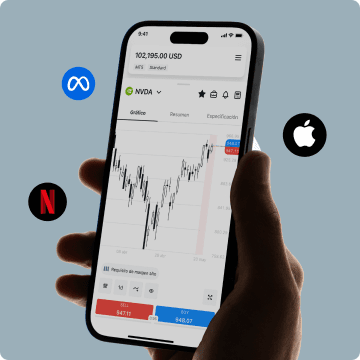
Trade stocks with zero commission
Trade the biggest names in tech and industry with low transaction costs.*
Terms and conditions apply.
The role stock exchanges play in the economy
Stock exchanges are more than just places to buy and sell stocks—they’re key pillars of the economy. When companies need to raise money, they can list their shares on an exchange through a process known as an initial public offering or “IPO”.
This gives investors the opportunity to own a stake in the company while providing the company with access to capital. For individual countries, strong exchanges signal a healthy financial system. They create jobs, attract foreign investment, and help businesses expand.

Examples of major global stock exchanges
Here are a few of the biggest and most influential stock exchanges in the world:
Exchange’s name | Country | Notable companies listed |
New York Stock Exchange (NYSE) | USA | Apple, Coca-Cola, Boeing |
London Stock Exchange (LSE) | UK | HSBC, BP, Unilever |
Tokyo Stock Exchange (TSE) | Japan | Toyota, Sony, Mitsubishi |
Australian Securities Exchange (ASX) | Australia | BHP, Commonwealth Bank, CSL |
Many online brokers offer access to stocks listed on these exchanges, providing global traders with the opportunity to participate. Alternatively, traders can use platforms like Exness to trade contracts for difference (CFDs), whereby they don’t take physical ownership of any stocks but can speculate on price changes and profit when correctly predicting a price rise or fall.
Stock CFDs are a simple and easy way to throw your hat into the ring, and are typically preferred by traders seeking short-term results.
How stock exchanges operate
The process of buying and selling stocks
Buying and selling stocks on a stock exchange is similar to any other marketplace transaction; you want to buy at a good price and sell when the price climbs. But instead of goods, you're trading shares of companies, and the process is managed electronically through highly secure trading systems.
When you place a trade, your order is matched with someone on the other side—either a buyer or a seller. This matching is done automatically by the exchange. The price you pay is determined by supply and demand at that moment.
It’s a similar story with stock CFDs, the price for which is determined by the stock’s market rate. You choose to either “buy” or “sell” the stock. With the former, you’re speculating that the price will rise; with the latter, you’re hoping for a price drop.
Understanding this system is key to mastering the introduction of stock exchange mechanics. For beginners, the idea is to start small, monitor how your trades execute, and learn how pricing fluctuates in real time.
The role of brokers and trading platforms
You can’t walk into a stock exchange and place an order yourself; this is where brokers come in. A broker acts as the middleman between you and the exchange. They are licensed to execute stock or CFD trades on your behalf and may offer access through trading platforms, like the Exness Terminal.
As a trusted broker, Exness allows you to access financial markets from various regions around the world. Using the Exness Terminal platform, you can view real-time stock market data, apply indicators, manage your trades, and even practice on a risk-free demo account before trading live.
You can learn more about interpreting these charts in our stock market analysis guide.

Trading hours and types of orders
Every exchange operates on its own trading schedule. For example, the NYSE runs from 09:30 to 16:00 Eastern Time (EST), Monday through Friday. However, due to global markets and after-hours trading, you can often trade at various times depending on your broker’s offerings.
When placing a CFD order, you can choose different types:
- Market Order: Executes immediately at the current market price.
- Limit Order: Sets a specific price—you’ll only buy or sell if the market hits it.
- Stop Order: Triggers a buy or sell once a certain price level is reached.

Types of stock exchanges
Traditional vs electronic exchanges
Historically, stock exchanges were physical spaces where traders shouted orders across crowded trading floors, a method known as “open outcry.” These are called traditional exchanges. The New York Stock Exchange famously operated this way for decades.
Today, most trading is done digitally through electronic exchanges, where buy and sell orders are matched automatically by computer systems. For modern traders—especially those in LATAM, MENA, SSA, or Asia—understanding this shift is key to grasping the introduction of stock exchange dynamics. The added speed and convenience of these exchanges mean markets react almost instantly to global and economic events.
CFD traders, for instance, may initiate “sell” orders following disappointing financial results or new trade tariffs that will impact the company in question.
Centralized vs decentralized trading platforms
A centralized trading platform routes all trades through a single exchange or broker. This model offers strong regulation and security, making it ideal for beginners. On the other hand, decentralized platforms allow peer-to-peer trading without intermediaries. These are more common in crypto markets but are gaining attention for their innovation. While they offer more freedom, they also come with higher risks and fewer safeguards.
For most new traders, centralized platforms—especially those provided by regulated brokers like Exness—are a better starting point to serve as an introduction to stock exchange environments.
Notable regional stock exchanges (e.g., NYSE, LSE, NSE)
The New York Stock Exchange is the largest stock exchange in the world by market capitalization, but the Nasdaq is a close second. These two US exchanges have a market cap of around 60 trillion USD, which is double that of the next biggest five exchanges (Shanghai Stock Exchange, Japan Stock Exchange, Euronext, London Stock Exchange, and Hong Kong Exchanges and Clearing) combined.
Other notable exchanges include:
- Brazil’s BM&FBOVESPA (B3) – The largest in Latin America and home to companies like Petrobras, Nu Holdings, Vale, and Ambev.
- Johannesburg Stock Exchange (JSE) – The biggest in Africa, with companies such as Gold Fields and Naspers.
- National Stock Exchange of India (NSE) – A major stock exchange located in Mumbai, with listings such as ACC Ltd, Asian Paints, and Apollo Tyres.
Understanding these regional players helps you connect global market activity with local opportunities. For example, negative economic events for the United Kingdom—such as new trade tariffs or significant changes in inflation and interest rates—could impact companies listed on the London Stock Exchange. What’s good for the national economy is usually good for the companies that support it, and vice versa.
Nearly all regions around the world have access to local exchanges, and while they are not available in every country, global trading platforms like Exness provide access to most traders.

How companies get listed on a stock exchange
Initial public offerings (IPOs) explained
The journey of a company to the stock exchange begins with an IPO. This is when a private company offers its shares to the public for the first time. The goal is to raise capital that can be used for expansion, paying off debt, or funding new projects. During the IPO process, the company works with investment banks to determine how many shares to sell and at what price. Once listed, its stock can be bought and sold on a public exchange. This marks a critical moment in the introduction of stock exchange functions, as it transforms businesses into publicly tradable entities.
Listing requirements and regulations
Getting listed on a stock exchange isn't automatic; companies must meet specific criteria. These often include meeting revenue, profitability, and corporate governance requirements. Each exchange sets its own standards. These requirements are in place to protect investors and maintain market integrity—vital principles in any introduction to stock exchange education.
Benefits of going public for companies
Going public has several major benefits:
- Access to capital: Raises large sums of money to fund growth.
- Brand visibility: Public companies gain media attention and consumer trust.
- Liquidity: Shares can be easily bought and sold, which is attractive to early investors and employees.
Key participants in the stock exchange
Retail investors vs institutional investors
In any trading introduction or stock exchange guide, it’s important to understand who is actually participating in the market. The two main groups are retail investors and institutional investors.
Retail investors are individual traders—people like you—buying and selling stocks or CFDs through personal accounts. These investors may use platforms like Exness to access markets and typically trade with smaller amounts of capital.
Institutional investors, on the other hand, are large organizations like pension funds, insurance companies, hedge funds, or mutual funds. They trade in large volumes and often influence stock prices due to the size of their transactions.
Role of market makers and liquidity providers
Market makers are specialized firms or brokers who constantly buy and sell stocks to ensure there's enough liquidity in the market. They “make a market” by quoting both buy and sell prices, allowing other participants to trade easily without delays.
Liquidity providers play a similar role by ensuring that large orders can be executed without drastically moving the price. Without these participants, markets would be slow, volatile, and inefficient.
Regulatory bodies and their influence
Every exchange is overseen by a regulatory authority. These bodies protect investors and uphold market integrity. Examples include the SEC ( Securities and Exchange Commission) in the US, the FCA (Financial Conduct Authority) in the UK , and the SEBI (Securities and Exchange Board of India) in India. These regulators enforce rules on disclosures, trading practices, and market conduct. For traders getting their first introduction to stock exchange basics, knowing that these protections exist builds confidence and trust in the market system.
How stock prices are determined
Supply and demand in action
At its core, stock pricing is driven by the basic economic principle of supply and demand. If more people want to buy than sell, the price goes up. If more people want to sell, the price goes down. This constant tug-of-war between buyers and sellers happens in real time on the exchange. Each trade shapes the current price of the stock.
The influence of news, earnings, and economic indicators
Stock prices don’t move randomly. They react to real-world events and financial updates. A positive earnings report can boost investor confidence and trigger a buying surge. On the flip side, bad news—like layoffs, scandals, and economic downturns—can spark selling.
Economic indicators such as interest rate changes, inflation reports, or unemployment data also affect pricing. These factors influence investor behavior across regions, including LATAM, MENA, SSA, and Asia. Being able to interpret how news impacts the market is a key part of developing your skills as a trader.
The concept of market capitalization
Market capitalization is a company’s total outstanding shares. It is calculated by multiplying the share price by the number of shares available.
For example, if a company has 1 million shares and each one trades at 50 USD, the market cap is 50 million USD. This figure helps investors categorize companies as small-cap, mid-cap, or large-cap. Understanding market cap helps you compare companies more fairly, regardless of their stock price.
You can explore this relationship in more depth in our article 9 economic indicators and their strategies.
Risks and rewards of investing in the stock market
Volatility and potential losses
Stock prices can swing quickly, sometimes within minutes. This movement is called volatility, and while it creates opportunities, it also introduces risk. A stock you buy at 10 USD could jump to 12 USD—or drop to 8 USD—in a short period.
Beginners must understand that no trade is guaranteed. Even with a solid introduction of stock exchange knowledge, external events like geopolitical tension, poor earnings, or market corrections can impact prices.
Long-term gains and compounding
Despite short-term risks, trading the stock market can lead to significant long-term gains. Historically, markets trend upward over time. If you stay invested and avoid panic-selling during downturns, you can benefit from compounding, earning profits on your profits.
For example, investing 1,000 USD in a growing stock that returns 10% annually could double in value in about seven years. The more time you give your investments, the more your returns build on themselves. For traders and investors across LATAM, MENA, SSA, and Asia, this concept is central to turning an introduction to stock exchange efforts into real financial growth.
Diversification and risk management strategies
Putting all your money in one stock is risky. If that company underperforms, your entire investment is exposed. Diversification—spreading your funds across different sectors, regions, or asset types—reduces risk.
Risk management tools like stop loss orders and position sizing can also protect your capital. These are easy to set up using platforms like Exness, where you can automate risk limits and test strategies on a demo account.

Frequently asked questions about CFD trading vs investing in stocks
What is the main difference between CFD trading and traditional investing in the stock market?
CFD trading lets you speculate on stock price movements without owning company shares, while investing involves buying and holding publicly traded companies for long-term gains. An introduction of stock exchange principles shows that CFDs are more short-term focused, whereas investing relies on capital growth and dividend payments.
Why do some traders prefer CFDs over direct stock investments?
CFDs allow traders to go long or short on securities traded, meaning they can profit whether prices rise or fall. They also provide access to global financial markets like the New York Stock Exchange and London Stock Exchange without needing to buy physical shares.
What risks should beginners know when trading CFDs?
While CFDs offer flexibility and leverage, they also carry higher risks than traditional investing. Price swings, overnight fees, and poor risk management strategies can lead to faster losses, which is why traders must use tools like stop loss orders and diversification.
How do investing and CFDs contribute differently to economic growth?
Investing through major stock exchanges supports capital formation by helping companies gain access to funds for expansion. CFD trading, on the other hand, doesn’t directly raise capital for businesses but increases market liquidity and allows individual retail investors to trade more flexibly.
Can I use both CFDs and traditional stock investments in my portfolio?
Yes, many investors combine CFD trading for short-term opportunities with long-term investments in company shares or exchange traded funds. This hybrid strategy allows exposure to capital gains from the secondary market while using CFDs for more active trading strategies.
Invest in the world’s biggest market movers
Trade stocks of the most successful global tech and industry giants.*
Terms and conditions apply.
Key takeaways
- Stock exchanges provide the foundation of global financial markets. From the New York Stock Exchange (NYSE) to the Shanghai Stock Exchange, these platforms connect buyers and sellers and facilitate efficient markets where securities are traded daily.
- Major stock exchanges fuel economic growth and investor confidence. Institutions like the London Stock Exchange, Tokyo Stock Exchange, and Bombay Stock Exchange enable companies to raise capital while helping investors trade with trust and transparency.
- The introduction of stock exchange knowledge is essential for new traders. Understanding how primary and secondary markets work gives retail investors and institutional investors the tools to participate confidently in stock trading.
- Electronic trading has transformed the securities industry. What once happened on a crowded trading floor now takes place online through brokerage firms and dealer markets, allowing faster execution and global access.
- Stock exchanges provide companies access to capital formation. Through initial public offerings, private companies can sell debt securities or capital stock, raising funds for expansion and innovation while becoming publicly traded companies.
- Market capitalization determines a company’s market value. Multiplying a stock price by the number of company shares outstanding helps classify businesses into small-cap, mid-cap, and large-cap categories across global capital markets.
- Indices like the Dow Jones Industrial Average track economic performance. By monitoring selected publicly traded companies on the New York Stock Exchange and Nasdaq, indices measure investor sentiment and broader financial market trends.
- Risk management is vital in both trading and investing. Whether through hedge funds, broker dealers, or individual retail investors, strategies like diversification, stop loss orders, and financial analysis protect investors and companies alike.
- Stock exchanges protect investors while ensuring fair price discovery. Exchange boards, stock brokers associations, and the World Federation of Exchanges (WFE) regulate financial transactions so investment bankers, market makers, and online brokerage firms can operate transparently.
Final thoughts: Why understanding stock exchanges matters for CFD traders
Getting a solid introduction of stock exchange concepts is one of the smartest first steps you can take as a new trader. Stock exchanges aren’t just places where prices move—they’re the beating heart of the global financial system. The stock market offers both risk and reward, but with the right tools, mindset, and broker support (as provided by Exness), you can participate smartly and responsibly.
Share:
Related


Exness Trade app
Trade with confidence anytime, anywhere.


Get the app
App title

Trading is risky. T&Cs apply.


