


Looking for a CFD broker but not sure where to start? This guide explains how CFDs work, what to look for in a broker, and how to choose one that gives you the best advantage when trading CFDs.
The broker market for Contracts for Difference (CFD) trading is worth over 7 billion USD, and that revenue is projected to surpass 10 billion USD in the coming years. A CFD broker is an intermediary for CFD trading, whereby traders speculate on the price of stocks, commodities, currencies, and indices and aim to profit from price fluctuations.
Trillions of dollars are traded every day on CFDs, and if you want to toss your hat into the ring and become a successful trader, there are various things to consider, including strategies, patterns, and trends. Before you get into all of that, though, you must partner with a reliable and secure CFD broker.
The right CFD broker can save you a lot of headaches down the line. Brokers like Exness, for instance, offer a complete trading ecosystem, giving you all the tools you need to monitor the financial markets and place rapid trades.
Content
What is a CFD broker?
A CFD broker is an intermediary through which traders can speculate on the price movements of assets such as commodities (like gold and silver), currencies (like EURUSD and USDJPY), and other instruments. Their role stretches much further than that, though. A good CFD broker can amplify or limit your potential trading profits depending on the functionality of the platform and the legitimacy/reliability of the broker.

Brokers differ with regard to the types of CFDs they offer, the prices they charge, the usability of their platform, the speed at which they execute trades, and general safety. Ultimately, you’re placing a great deal of trust in them, which makes their reliability and transparency extremely important, especially when you are making substantial trades. If the broker isn’t regulated in your jurisdiction, you’ll have very little recourse if anything untoward happens, and you will be left more exposed to scams.
The CFD serves as a contract between the trader and the broker, and unlike a traditional broker, CFD trading doesn’t require the trader to own the actual asset.
CFD brokers also allow leverage, which means users can trade more than their account balance. For instance, 1:50 leverage increases potential returns by 50x but will also amplify losses by 50x.
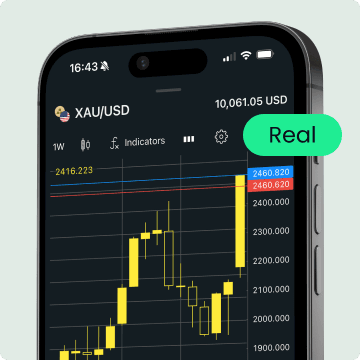
Exness Trade app
Trade with confidence anytime, anywhere.
Key factors to consider when choosing a CFD broker
To find the most suitable CFD broker for your needs, consider the following:
Regulation and licensing
Your CFD broker must be licensed by local regulatory bodies, including the Cyprus Securities and Exchange Commission (CySEC) and the Financial Conduct Authority (FCA). These agencies set the standards for safe, fair, and trustworthy operations and ensure that brokers operate according to regulatory rules.
Regulators guard against financial risk, inspiring trader confidence by working to prevent everything from insider trading to fraud. They ensure that brokers meet their standards before granting a license, and they can also penalize them if they break the rules.
The biggest and best CFD brokers work with multiple regulators and cover multiple jurisdictions. Exness is one such broker, licensed by CySEC, the FCA, and the FSC.
CFD trading platform and tools
A user-friendly interface makes things easier for beginners and facilitates faster, smoother trades for professionals. You want an intuitive interface that works with you and not against you. If you’ve ever tried to make a quick trade only to be met with frustrating menus and a frantic search for the right options, you’ll understand the importance of clear navigation.
A good platform should also be packed with tools that help you analyze the markets, easily view your active trades, and include charting features to develop your strategies.
With Exness, all members benefit from a powerful CFD trading platform, the Exness Terminal, that ensures a seamless experience from registration to execution.
An intuitive platform should also offer powerful analysis tools—this guide on the top 20 trading indicators can help you sharpen your strategies when using the tools offered by your CFD broker.

Asset variety
Can you actually trade the assets you want to trade? CFD brokers offer a plethora of categories, including forex, stocks, commodities, and indices. More is definitely better in this department.
A diversified range of assets means you can more easily find options to suit your strategy, whether you’re responding to major international news impacting specific markets or looking for trading patterns in certain assets.
Fees and commissions
CFD brokers typically charge a commission, spread, or both:
- Spread: The difference between the bid and ask price.
- Commission: A flat fee or a percentage of the trade.
You should also check for hidden fees, including an overnight fee, which is usually charged on positions held for more than a day, and a withdrawal fee, charged on all withdrawals.
At Exness, all traders benefit from tight spreads, keeping CFD trading costs low for everyone.
Leverage and margin requirements
Leverage is the ratio by which a trade is amplified, so 1:50 can turn a 1,000 USD trade into a 50,000 USD position. Margin is the collateral a trader needs for a leveraged trade.
High leverage increases the potential return, but it also increases the trader’s risk and should be approached with caution. Traders must be fully aware of the risks involved before using leverage to open larger CFD positions. Leverage is a double-edged sword—while it can multiply profits, it can just as easily amplify losses beyond your initial expectations.
Order execution and slippage
Slippage occurs when the price changes late in the trade, creating a difference between the expected and executed price. Busy and volatile markets can cause this difference in price, but once again, the broker plays a crucial role in this situation. Brokers with fast, high-tech platforms are less likely to experience slippage, resulting in more reliable trades.
Exness focuses on lightning-fast execution speeds to allow traders to capitalize on market opportunities. However, be mindful that even minor events like interest rate cuts can trigger rapid shifts in volatility—understanding the sentiment-driven dynamics outlined in this Exness Insights piece can help you avoid execution surprises.
Fast platforms are imperative, especially during volatile market conditions, when even milliseconds can lead to slippage or missed opportunities.
Comparing different types of CFD brokers
Market makers vs A-book & B-book brokers: Key differences
When discussing CFD brokers, it’s important not to confuse Market makers with A- and B-book brokers—they are related but not identical concepts. Here’s a clear breakdown:
Market makers (e.g., Exness)
- Definition: Brokers that quote both buy and sell prices and fill orders from their own liquidity pool rather than routing them directly to external financial markets.
- Execution: They act as the counterparty to your trades but typically hedge their exposure through internal risk management systems or external liquidity providers.
- Profit source: They make money only from spreads, commissions, and fees, not from your losses.
- Example broker: Exness is a market maker but emphasizes fair execution and does not rely on clients losing to generate revenue.
A-book brokers
- Definition: Brokers that pass all trades directly to external liquidity providers or markets.
- Execution: Your orders are filled by third parties, as the broker never takes the opposite side.
- Profit source: Income is generated purely from spreads and/or commissions, regardless of your trading results.
B-book brokers
- Definition: Brokers that choose to internalize (not hedge) trades, effectively taking the opposite side of your position.
- Execution: If a trader loses, the broker may retain the full amount of the loss.
- Profit source: They may profit directly from client losses, which creates a potential conflict of interest.
Example: How a broker makes money
Let’s say you open a 1-lot EURUSD trade with a 1.0 pip spread.
- Pip value per lot: 10 USD
- Spread cost: 1 pip = 10 USD
- Broker's revenue: 10 USD from the spread.
- Commission (if applicable): For example, 7 USD per lot round-trip.
- Total income for the broker: 17 USD
Even if you close the trade at breakeven, the broker still earns 17 USD, showing that they don't need you to lose to profit.
Which type suits your trading style?
Your approach to CFD trading will determine your trading style:
- Scalpers aim to profit from small price fluctuations. They trade many times a day and often hold positions for minutes or seconds. They rely on fast decision-making skills and constant focus.
- Long-term traders hold positions for long periods and seek to profit from major price shifts. They are patient and avoid cashing out too soon.

Regardless of your strategy, you need a broker that supports consistent order execution. Exness is a prime example, as it offers trading transparency and operates on a reliable, stable platform.
Depending on your level of experience and strategy, Exness offers tailored account options: explore the full-featured Standard Account for comprehensive tools or the high-performance Pro Account for tighter pricing and faster execution. Both accounts can be tested using a risk‑free demo account to familiarize yourself with the platform before you start trading.
How to test a CFD broker before committing
Using demo accounts
A demo trading account is a free-to-use trading account that simulates real trading but uses virtual credits instead of real money. You can trade on real markets with zero risk to get a feel for how the platform works. Spend some time placing trades, checking charts, and implementing strategies to see if it’s a good fit.

Customer support and service
Who do you contact if you have an issue? More importantly, are they available around the clock, and do they speak your language?
At Exness, traders can access 24/7 multilingual support, with rapid responses to all customer queries and issues.
Common mistakes to avoid when choosing a CFD broker
Ignoring the fine print
The best CFD brokers are upfront about their main charges and rules, but others may hide them in the small print. Always read the terms and conditions to weed out hidden fees and other problematic terms. If you find important terms that were hidden away and misrepresented in promotional materials, look for another CFD broker.
Falling for marketing gimmicks
Avoid any CFD broker that makes grandiose claims about their platform and tools. It’s okay if they tell you that they have a lot of features, but it’s not okay for them to claim you can make lots of money. You should also be wary of bonus offers that seem too good to be true, as they probably are (another reason to read the small print).
Not considering your own needs and goals
If you’re a beginner on a small budget, you don’t need a CFD broker that only deals in high leverage, requires a substantial initial deposit, and doesn’t offer any assistance for newcomers.
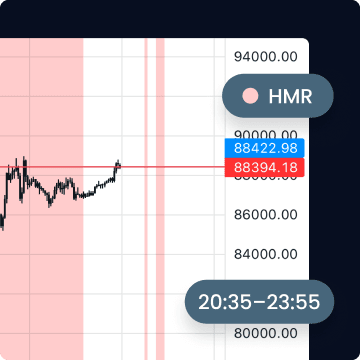
Your trading toolkit matters
We offer advanced trading tools to enhance your efficiency and precision.
Key takeaways
- A CFD broker is your gateway to global markets. They provide access to various financial instruments, allowing you to speculate on assets like forex, indices, stocks, and commodities without owning them.
- Trading CFDs involves high risk and isn't suitable for everyone. These are complex instruments, and due to leverage, there’s a high risk of losing money rapidly, especially for inexperienced traders.
- Market makers like Exness do not profit from your losses. Contrary to popular belief, reputable market makers make money from spreads and commissions, not from client losses, and usually hedge positions to manage risk.
- Forex trading is one of the most active CFD categories. Brokers typically offer a wide range of forex pairs to allow traders to take advantage of global currency movements and participate in the exchange of major and minor pairs.
- Regulation ensures that your capital is protected. A licensed CFD broker operating under regulators like CySEC and the FCA must adhere to standards designed to protect traders and reduce the risk of losing capital unfairly.
- CFD trading platforms vary in functionality. A quality platform provides real-time data, technical tools, seamless order execution, and access to a broad range of global markets, which is essential for serious traders.
- Leverage and margin define your trade size and risk. Trading with leverage allows you to open large positions (like a CFD position) with small margin requirements, amplifying both potential profits and potential losses.
- Trading CFDs gives you exposure to global markets without ownership. A CFD is a financial instrument that tracks the price movement of an underlying asset, giving you speculative power without needing to buy the actual stock, commodity, or currency.
- Forex trading and CFD trading appeal to different strategies. Experienced traders might combine both to diversify strategies across short-term volatility (in forex) and long-term macro trends (in indices, commodities, etc.).
- Start trading with a demo to test the broker’s services. Before you risk real money, use a demo account to experience the broker’s services, understand trade execution, and prepare yourself for live trading in the fast-paced CFD environment.
Final thoughts
Remember, while a CFD broker acts as an intermediary, its role goes much deeper. A good CFD broker is like a trading concierge—a platform that facilitates trades but also supports you and makes your life easier with rapid executions, charts, tools, 24/7 support, helpful guides, and competitive, transparent charges.
Above all, a good CFD broker is always regulated—there is no exception.
Studying trends, using analytics, and incorporating strategies are key to successful trading, but the first step is to choose a trusted broker with a quality platform to support your trading strategies as well as help you manage risk to minimize your potential loss and protect your capital through advanced security measures.
Share:
Related


Exness Trade app
Trade with confidence anytime, anywhere.


Get the app
App title

Trading is risky. T&Cs apply.

