
Trading Pro Q&A: What market structure concepts do you rely on most, and why?


Forget the indicator overload—these three Exness Team Pro traders strip trading back to the basics: support, resistance, structure, and patience. Here's how they read price action to find setups worth actually taking.
Ask 10 traders what "high-probability setup" means, and you'll likely get 10 different answers, so I sat down with three Exness Team Pro traders to find out what actually holds up when the charts get noisy.
What surprised me was how little any of them relied on traditional indicators. One trader reads little more than support, resistance, and the broader trend. Another builds his read around breaks in market structure and waits patiently for confirmation before acting. And a third leans almost entirely on price action and session levels, letting the candles do the talking. Different tools, same underlying discipline: none of them are chasing a signal. They're all waiting for the pieces to line up before they commit.
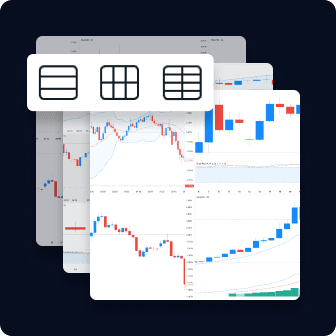
Stay in control of your Exposure
Watch up to 8 charts on one screen and manage your risk at a glance.
Which market structure concepts do you rely on most, and how do you define high-probability setups?

Nico Palacios
Exness Team Pro LATAM
I read the market the old-fashioned way: support, resistance, and the long-term trend. I don't use RSI, MACD, or Fibonacci. Most traders lose because they try to predict short-term price movements using those indicators, and that's not a game you can win against large institutional players.
My high-probability setup isn't about predicting the market's next move—it's about being prepared to adapt. I trade in the direction of the broader macro trend, meaning I only take long positions. When the price declines toward key support levels, I place buy limit orders at lower prices to average into my position at a discount.
For me, a high-probability setup doesn't come from finding the perfect entry point. It comes from trading in the direction of the prevailing trend and managing risk effectively on every trade.
Insight for traders:
A high-probability setup isn't a perfect entry—it's trading with the trend and managing risk on every single position.

Mohamed Albadi
Exness Team Pro MENA
I rely primarily on market structure to determine the prevailing trend. My focus is on the sequence of higher highs and higher lows—if the market continues to form them, I consider it to be in an uptrend, and the opposite applies to a downtrend. One of the most reliable concepts in my trading is a break in market structure that is supported by strong momentum, followed by waiting for a retest rather than chasing the initial move.
When it comes to high-probability setups, I never rely on a single signal. Instead, I look for confluence between several factors: a clear trend on the higher timeframe, a break or shift in market structure, a key support, resistance, supply, or demand zone, and sound risk management with a favorable risk-to-reward ratio. If these elements don't align, I prefer to stay out of the market rather than force a trade.
Insight for traders:
A single signal is never enough. Wait for structure, trend, key levels, and risk management to all align before entering.

Nathan Halaba
Exness Team Pro SSA
Look, my trading is purely about price action and the story price is telling through structure. It’s not complicated.
I’m looking at previous highs and lows, session levels, the daily open, and how price reacts to liquidity. Like, the Asian session gives me levels to watch once London and New York get active.
A high-probability setup isn’t just one signal for me. I need confluence. I want the structure to make sense, price to be positioned right against the daily open, and then I want to see the candles tell me the same thing.
The more pieces of that story that line up, the more interested I am in taking the trade. Simple as that.
Insight for traders:
The more pieces of the story line up—structure, session levels, price action—the more confident I am taking the trade.
Key takeaways
- High-probability setups rely on confluence, not a single indicator or signal.
- Trading in the direction of the prevailing trend reduces the need to predict short-term price movement.
- Key support and resistance levels remain foundational, even without additional technical indicators.
- A break in market structure is more meaningful when followed by a retest rather than an immediate chase.
- Session levels—like the Asian session—can provide reference points for later, more active trading sessions.
- Sound risk management is a non-negotiable part of any high-probability setup, regardless of strategy.
- Staying out of the market is often the right call when the pieces don't line up.
Disclaimer: This information is for educational purposes only and is not financial or trading advice. Trading involves risk, including potential loss of principal, and past performance doesn't guarantee future results. Always test new trading ideas on a demo account before using real funds.
Share:
Related


Exness Trade app
Trade with confidence anytime, anywhere.


Get the app
App title

Trading is risky. T&Cs apply.


