
Trading Pro Q&A: Fading technical concepts and market changes


The indicators that dominated trading a decade ago haven't disappeared—but their role has quietly changed. Three Exness Team Pro traders explain which technical concepts have lost value over time and what shifted underneath them.
Trading concepts rarely die outright—they usually get demoted. Curious which ones had faded for the pros and why, I asked three Exness Team Pro traders which technical tools have become less valuable over their careers and what drove that shift. None of them described a clean break from indicators—more of a quiet reshuffling. One trader has shifted away from using any single indicator in isolation, leaning instead on price action and market context. Another pointed out that older concepts like price and candle volume alone stopped being sufficient once traders began incorporating supply and demand positioning—and credited AI with refining his own algorithmic approach. And a third still uses classic tools like moving averages, RSI, and MACD, but explained that their weighting has changed: liquidity and order flow now lead, while those older indicators confirm rather than drive his decisions. Across all three, the takeaway wasn't that old concepts stopped working—it's that the market changed their order of importance.
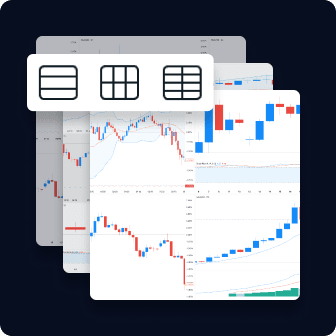
Stay in control of your Exposure
Watch up to 8 charts on one screen and manage your risk at a glance.
In your experience, which technical concepts have become less valuable over time, and what market changes do you believe contributed to that shift?

Mr Platinum
Exness Team Pro SSA
For me, indicators used in isolation have become less valuable.
The market is dynamic, and no single indicator can predict the next move on its own.
Today, I place more importance on price action, market context, and the market’s reaction around key areas.
Insight for traders:
No single indicator can predict the market alone. Price action and context matter more than any one tool.

Adrian Nardelli
Exness Team Pro LATAM
I think that rather than losing value, many concepts have stopped being sufficient on their own. Some years ago, it was very common to see traders trading based only on price and candle volume.
Today, many have incorporated different tools to identify supply and demand positions.
At the same time, artificial intelligence has helped traders with algorithmic systems, and I say that from my own experience. In my case, AI helped me refine concepts for my algorithmic system and greatly improved my trades.
Insight for traders:
Concepts didn't lose value—they stopped being sufficient on their own. Supply and demand positioning now fills that gap.

Hussain Almatrouk
Exness Team Pro MENA
I haven’t dropped classic indicators—I still use moving averages, and RSI and MACD are still in my toolkit; they’re just the tools I lean on the least these days. What changed is the weighting. Early on, those indicators were doing most of the work in deciding where I looked. Now liquidity and order flow, which is what HM Trades is built around, do most of that work, and the classic indicators sit behind them, confirming rather than leading.
Retail participation and algorithmic execution have changed how price is delivered, and a lot of what those indicators are built to detect now lags behind what’s actually driving the move. The market didn’t become more random; I just found a way to read what’s happening earlier than an indicator can.
Insight for traders:
Classic indicators didn't stop working—they just started lagging behind what's actually driving the move.
Key takeaways
- Technical concepts rarely disappear entirely—their role often shifts from leading a decision to confirming one.
- Indicators used in isolation are increasingly seen as insufficient without broader market context and price action.
- Supply and demand positioning has become a common addition to strategies once built solely on price and volume.
- AI and algorithmic systems have helped some traders refine and improve their existing technical approaches.
- Liquidity and order flow are increasingly prioritized over classic indicators like moving averages, RSI, and MACD.
- Retail participation and algorithmic execution have changed how price gets delivered, affecting what older indicators can detect.
- The market isn't necessarily more random—some traders have simply found ways to read moves earlier than traditional indicators allow.
Disclaimer: This information is for educational purposes only and is not financial or trading advice. Trading involves risk, including potential loss of principal, and past performance doesn't guarantee future results. Always test new trading ideas on a demo account before using real funds.
Share:
Related
Trading Pro Q&A: How do you integrate multiple timeframes into your trading?
Trading Pro Q&A

Trading Pro Q&A: Real breakout or liquidity-driven fakeout?
Trading Pro Q&A

Trading Pro Q&A: How do you validate support and resistance levels?
Trading Pro Q&A

Balancing fundamentals and technical analysis for forex
Expert opinions

Exness Trade app
Trade with confidence anytime, anywhere.


Get the app
App title

Trading is risky. T&Cs apply.
More in Deep dives


