
SpaceX hit 2 trillion USD after its IPO. Are OpenAI and Anthropic next?


SpaceX, OpenAI, and Anthropic are all hitting public markets within six months, with a combined target north of 3.5 trillion USD. SpaceX has already been listed, and it soared. The real question for everything that follows: durable franchises, or the most crowded trade of the cycle?
SpaceX has already gone public, and it never went quietly. On 12 June, the company priced the largest IPO on record: 75 billion USD raised, up 19% on day one, and a close above 2 trillion USD that briefly made Elon Musk a paper trillionaire.
OpenAI filed confidentially on 8 June for a September listing at 852 billion to 1 trillion USD; Anthropic follows in October at 965 billion USD. Together, more than 3.5 trillion USD within six months, unmatched by any prior IPO cycle.
Whether AI is transformative is settled. The question is whether these are real businesses or venture-subsidised growth that cannot survive public earnings. SpaceX passed the first test; the harder ones come next.
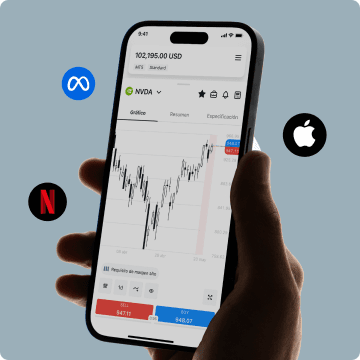
Trade stocks with zero commission
Trade the biggest names in tech and industry with low transaction costs.*
Terms and conditions apply.
Key takeaways
- The combined target dwarfs anything markets have priced. Meta’s 2012 record was about 104 billion USD. SpaceX alone debuted at nearly twenty times that.
- The leaders are profitable; the IPO names are not all proven. NVIDIA earns over 100 billion USD in free cash flow, with a near-30x earnings multiple. OpenAI loses about 14 billion USD on 25 billion USD of revenue.
- Hyperscaler capex dwarfs the dot-com telecom build. The big four will spend around 600-700 billion USD this year, more than the entire late-1990s buildout.
- Anthropic’s profit milestone needs an asterisk. Its projected first profit excludes stock comp and leans on a temporary compute discount that may not last.
- The order of the listings does real work. Each deal prices off the last; a weak OpenAI debut would drag on everything behind SpaceX’s anchor.
Why the AI IPO wave depends on listing order
The running order here is not random. SpaceX went first, listing on Nasdaq as SPCX after absorbing xAI in February 2026, the most diversified pitch of the three: Starlink, AI compute, and data centres in one package. OpenAI follows in September on ChatGPT’s 900 million weekly users, the GPT-5 model family, and a 122 billion USD war chest from Amazon, NVIDIA, and SoftBank. Anthropic lists last at 965 billion USD with the cleanest unit economics. The logic: let the most financeable name set the price, then let the purer AI bets trade off it.
Why the AI IPO wave has real revenue behind it
The bull case rests on something concrete: a demand that pays. ChatGPT reached 100 million users two months after launch, faster than any consumer product before it, and now serves around 900 million a week. More to the point, that usage shows up as contracted revenue, not traffic: OpenAI has cleared 25 billion USD annualised, and Anthropic booked 10.9 billion USD in Q2, up 130% sequentially.
The companies bankrolling the boom are also in far better shape than their dot-com forebears. NVIDIA trades near 30× earnings, throws off more than 100 billion USD in free cash flow, and runs margins above 55%. At its March 2000 peak, Cisco fetched roughly 200× on a fraction of that cash. So the hardware driving this cycle is cheaper than last time and generates far more cash, bought by the most profitable companies on earth.

Three risks that could derail AI valuations
Risk 1: Valuations require unprecedented revenue growth
At 852 billion USD, OpenAI is priced near 34 times annualised revenue. To grow its revenue, it has to roughly double, then double again, while adoption holds, open-source rivals stay contained, and compute costs don’t outrun sales. History is unkind here: even the fastest-growing software names slowed as they neared 10–20 billion USD. OpenAI is forecasting the opposite while losing about 14 billion USD a year.
Risk 2: The capex bubble dwarfs the telecom build
This is the parallel that should worry the bulls most. Telecom spent an estimated 500 billion USD on capacity in the late 1990s. The four largest hyperscalers will spend around 600-$700 billion USD this year alone. That capacity is a bet that AI revenue will arrive to fill it. If it doesn’t, the unwind runs down the supply chain, from NVIDIA’s order book to every valuation built on hyperscaler demand.
Risk 3: Index inclusion could trigger passive selling
There is a mechanical risk, too. Once these names join the major indices, passive funds have to buy them and sell what they already own to fund it. At a combined 3.5 trillion+ USD, that reshuffle could force hundreds of billions in sales of the same megacaps that drove the market upwards. Add lock-up expiries about six months after each debut, and the supply could get heavy.
AI IPO wave vs dot-com bubble: What history tells us
Everyone reaches for the dot-com comparison, and the lazy version is wrong. But parts of it hold. Start with concentration: the top 10 S&P 500 names make up about 36% of the index, against roughly 27% at the 2000 peak. NVIDIA leans on a handful of hyperscaler buyers, a concentration risk with no real dot-com precedent. And spending is heavy enough that Amazon’s free cash flow turns negative this year.
Where it breaks down matters just as much. The forward P/E is near 22x, not the 27x of the early 2000s. IPO issuance is recovering, but nowhere near the 1999 flood. And the technology works: customers pay real money today, where 1999’s web was mostly a promise over dial-up. Neither caricature helps. Dismiss it, and you ignore real concentration and capex risk; lean on it too hard, and you miss how much more profitable this cohort is.

Key catalysts for SpaceX, OpenAI, and Anthropic valuations
A few things will tell you which way this breaks. First, OpenAI’s S-1 numbers, released publicly about 15 days before the roadshow, when the market finally sees the 14 billion USD loss, revenue concentration, and compute bill in full. Second, hyperscaler capex guidance on the Q3 and Q4 calls, the signal that matters most, since the thesis rests on these four buying compute. Third, whether Anthropic’s profit claim survives an audited filing.
Invest in the world’s biggest market movers
Trade stocks of the most successful global tech and industry giants.*
Terms and conditions apply.
Final thoughts: Is the AI IPO wave a bubble or a generational opportunity?
So, bubble or generational opportunity? Framed that way, it is the wrong question. SpaceX has shown there is a real appetite, but a strong first day proves little: Meta was priced at 38 USD in 2012, broke below that level, and took a year to recover. Stop treating the three as one trade. SpaceX has the most diversified revenue, Anthropic the cleanest profit story (caveats and all), and OpenAI the widest reach but the murkiest path to profit. The variable that matters most is hyperscaler capex. Keep it climbing, and today’s prices may look cheap in two years; let it stall, and no consumer enthusiasm offsets the damage downstream.
Share:
Related


Exness Trade app
Trade with confidence anytime, anywhere.


Get the app
App title

Trading is risky. T&Cs apply.


